Sometimes I need a boost of energy and a reminder of my home borough. In those times, I turn to Just Blaze, Jay-Z and the fine folks from the Mash Out Posse.
Lil’ Fame and Billy Danze bring an aggressive energy to their music that can’t be ignored, especially in small doses (How About Some Hardcore, Ante Up, B.I. vs. Friendship). I’m still not sure that their approach works for an entire album, but there’s no one better at getting you revved up within a short period of time.
Jay wisely avoids any efforts to match M.O.P.’s aggression, opting to complement their rage with something I like to call ‘anthemic Jay-Z’ – clever, slickly delivered lines designed to highlight his wealth and his street roots.
Just Blaze does beautiful things to the Bobby Byrd sample at the center of this track. He has produced countless classic tracks, but this is one of my favorite. He contorts Byrd’s voice until it sounds like an inhuman plea and transforms the brass and drum sections of the song into something magical.
(1) I Shot Ya Freestyle (2001) H Money Bags, Beanie Sigel, Freeway (intro by Jay-Z and Funkmaster Flex)
One of the best experiences in hip-hop is that moment when you first realize that you’re listening to a unique voice (or set of voices). It’s like the scenes in movies about pop/rock stars when everything finally gels and the band/star show flashes of their future as the next big thing, except stardom is besides the point in hip-hop. I still remember when I heard Royce da 5’9” and Eminem freestyle on the Stretch and Bobbito Show in 1998 and felt like I was watching the birth of a star and a legend. There are also the moments when you first realize the strength of a local scene or movement, like the Cam’ron/Dipset mixtapes from the early aughts, the Bad Boy freestyles from 96-97 (which introduced many of us to the LOX and the talent brewing in Yonkers) or the Clipse’s We Got It For Cheap mixtape series in the mid aughts. This track (and the longer one later in this mix) are from a mixtape that has elements of both – it served as an introduction to Freeway (who had a brief guest spot on 1-900 Hustler from Jay-Z’s Dynasty: Roc La Familia album a few months before) and the State Property crew from Philly. It was also the moment when I realized the true potential of Beanie Sigel.
The track starts with a classic Funkmaster Flex station id and some quick banter between the DJ and Jay Z. Flex puts on the instrumental for the I Shot Ya remix (from LL Cool J’s 1995 Mr. Smith album). H Money Bags’ verse is a great warm up – he says all the tough guy things that one might expect, from “side blocks and dumpsters, that’s where I leave niggas” to “put three in your liver, leave you leaking cheap liquor”.It’s entertaining but there’s not a lot to distinguish it from any other verse from the era.
Sigel and Freeway arrive on the track next. Sigel had that super clear ‘voice of god’ flow that conformed to my notion of ‘good rapping’ throughout most of the nineties and the early aughts. Freeway was the revelation. He had a strangely high pitched melodic flow that complemented Sigel’s aggressive percussion, particularly when the two exchange verses. The duo start with a dialogue about a robbery scheme (“man, I’m dying to see if my face still work in this mask…”) and transition to individual stories about their transition to adulthood. Beanie emphasizes every word in a way that helps me build momentum during a run. He starts with “sixteen, dog/and I ain’t talking bout years/I’m talking bout bars/I’m talking bout tears” and I find myself tapping into a reserve of energy that I didn’t know I had. Freeway follows with a truncated verse mirroring Beanie’s sketch of his teenage years. It’s a good verse, but it becomes great when Free pivots into a freestyle that is so impassioned that I barely notice when the beat changes. Check out the Youtube video here.
Some words on the current playlist before it goes into retirement.
The original version of this post included some reflections on the individual songs from one of my most frequently used playlists. I don’t think that it worked at all (as evidenced by the fact that no one read it). I neglected to include a narrative thread that would have tied the entries on each song together and it was far too long (if you know me at all, you know that I tend to ramble). So, I’m going to call a mulligan.
I’m a runner who is reliant on weird playlists. When I first started running, I read a great post from Brent Rose about the importance of tempo in running playlists. My first few playlists were based on his sage advice, but I quickly abandoned that for a ‘songs that interest me/get me hyped’ approach to building a playlist. At one point, I even included most of the first Run the Jewels album. On another occasion, I included most of the Hamilton soundtrack.
My two current playlists are a mix of hip-hop songs released in my teens and twenties (when I had more time to commit to keeping up with and loving hip-hop). It’s a messy blend of tempos, subgenres and styles, but they all resonate with me at some point in a typical run.
My next one will probably be a bit more of a standard one to help me get better. We’ll see how that goes.
I’ve split up my original post into a few separate posts in the hope that it makes it an easier read. Hope you like it!
I Miss You (Come Home), by Monifah ft. Heavy D and McGruff (possibly?), from Monifah’s debut Moods…Moments. This is my jam.
The Things You Do (Bad Boy Remix) by Gina Thompson from her Nobody Does It Better album featuring a verse from the incomparable Missy Elliott. I love the cameos from Biggie Smalls and Puff Daddy (Sean Combs will always be Puffy or Puff Daddy in my book).
Soon As I Get Home by Faith Evans from her debut Faith. This is still my favorite Bad Boy r&b album – a gentler, soulful take on the early New Jack Swing sound that dominated the genre (and the era).
What Kind of Man Would I Be by Mint Condition from their classic Definition of a Band. It’s hard to do a song like this without striking a false note, but Mint Condition finds a way.
Lady (remix) by D’Angelo with AZ. I love the original more (AZ’s verse is good, but doesn’t really fit the song), but this video, featuring Faith Evans, Erykah Badu and Joi Gilliam is everything.
Tell Me, by Groove Theory, from their eponymous debut. I love the elegant simplicity of the production and the lyrics.
Sunshine and the Rain, by Joi, from her criminally underrated debut the Pendulum Vibe. I can’t say enough about this album.
I’ve spent most of the last six months thinking about trauma. In my day job, we’re investing a lot of time and effort to identify the ways in which the traumatic experiences of our clients (individuals from vulnerable populations with some involvement in the justice system) affect their lives, with the goal of developing interventions that can help them process those experiences and clear obstacles to a successful, independent life in the community. I’ve also thought about this in a more personal context, as the cycle of life and death has hit pretty close to home lately.
good kid is a soundtrack for trauma that evokes the experience of being a young black man in the inner city. A narrative about the intangible rents extracted by two forces struggling to establish a monopoly on the use of force in the community. But I’m getting ahead of myself. The first thing that always strikes me about this song is how Kendrick uses his cadence to convey emotion. Kendrick finds different ways to build momentum throughout the album, from using a progressively more complex flow to shifting from soft to more percussive words or simply increasing the pace of his delivery. On good kid, he layers his vocals on the last third of each verse so that you feel the pressure build until you almost feel the foot on your neck.
The references to a foot on the neck evokes Orwell’s 1984(“If you want a vision of the future, imagine a boot stamping on a human face – forever”) and serve as a visceral reminder of the physical brutality behind the metaphors. The phrase also helps puts the listener in the position of a victim of neighborhood violence and terror, someone who might think that the line between corrupt police and organized crime is gossamer thin.
Radicals have argued that badges are the only difference between police and gangs for decades, but good kid focuses on the psychic impact of this toxic dynamic on noncombatants. It’s the feeling of being stuck between two minority groups that make you feel like a stranger in your own neighborhood. When I was a young man, it felt like they were in an abusive, yet oddly symbiotic relationship. Even though both groups sincerely hated the other, it seemed as if police and gangs were invested in a vision of the poor/working class community as war zone/occupied territory, a narrative that crowded out competing views of the neighborhood.
I was uncomfortable with both narratives. Neither seemed to capture the messy contradictions of inner city urban life. If you drove by my grandparents’ neighborhood of Bedford Stuyvesant in the late 1980’s, you might assume that it was the kind of wartorn dystopia that Charles Murray warned us about in the previous decade. This ‘truth’ lost its power if you entered the brownstones or saw the people who filled and emptied the subway during rush hour. Maybe it would be harder for residents to resist the dystopian narrative in communities where mature gangs were deeply entrenched (and in small scale long wars with the local police department), but I imagine that in areas where mature gangs were deeply entrenched in the community, it would be harder for residents to resist the dystopian narrative, but even though the corner boys in Bed Stuy were pervasive, they weren’t part of mainstream culture like the Bloods, Crips or Folk, and most folk I knew from the area didn’t mistake their neighborhood for a literal war zone.
I was lucky. I had the right friends, knew when to appear tough and when to seem invisible, managed to avoid the wrong conflicts with the wrong people. My adolescence wasn’t traumatic, but it was emotionally draining. I don’t think I realized how exhausted I was until I moved away to college. I had become so used to being guarded all of the time, to the pressure and stress related to maneuvering through neighborhoods, that its absence felt almost alien. There’s this moment in good kid where Kendrick says that he got ate alive the other day, and while he might be talking about getting jumped, I remember having that feeling at the end of the day without anyone laying a hand on me. I guess that’s why the third verse (which explicitly references drugs) feels inevitable. The ever present threat and reality of violence has a traumatic impact on the body, the mind and the spirit. It fills you with despair and animosity. It’s only natural to search for an anesthetic, something to numb the pain, ease the pressure. A little drink, a little smoke, a handful of pills. The only problem is that the cure is worse than the disease, an illusory balm that “release[s] the worst out of [your] best”.
Killer Mike comes at this from a different angle in Willie Burke Sherwood, his autobiographical song from last year’s classic R.A.P. Music.
In the brilliant first verse, Mike breathlessly recounts the string of violent tragedies that led him to adapt to the realities of violence in his neighborhood by creating a persona that would be respected in the streets. An identity equally informed by the Lord of the Flies and the music of Tupac Shakur – narratives about the anger that fuels an endless cycle of violence and trauma. While Kendrick hints at escape through narcotics, Mike copes by becoming harder, by becoming “like an iron man“. In real life, Mike went on to become a working class guy before going into music, but it’s easy to imagine how his decision to become hard could’ve had tragic consequences. Prisons and graveyards are filled with men who decided to become hard in the narrow way that garners respect in the street. Although Mike’s choices were different than mine, there’s something about the “and I bought my first tape by Tupac and I got hard” line that reminds me of how effective Tupac was at articulating the righteous anger that I felt through most of my teenage years. I distinctly remember what struggling to control my anger felt like. How hard it was to not overreact to every perceived slight. It starts as a defense mechanism, but ends up as a crutch, especially once I realized that I was carrying those feelings around with me where ever I went. As Ta-Nehisi Coates once wrote, “even if you are not out in The Street, it’s very hard for none of The Street to live in you“.
Kendrick suggests a number of ways to resolve this conflict (or ease the tension) in Good Kid m.a.a.d. city, most notably in Sing About Me, I’m Dying of Thirst, Black Boy Fly and the skit at the end of Real. But the solution that resonates the most right now is Freedom, by Anthony Hamilton and Elayna Boynton. The need to escape implicit in good kid is brought to the surface in the gospel tinged duet from the Django Unchained soundtrack.
Freedom was one of the many perfectly placed (if on the nose) sonic accompaniments to the film. The song’s power grows on repeated listening. When I first heard it, I thought that it helped situate Django within the legacy of American folk heroes and the African American community’s long struggle towards freedom while reminding us that his struggle was an intensely personal one. It’s a song about desperate hope in the face of impossible odds, a brief intrusion of reality into Quentin Tarantino’s heightened fantasy.
Freedom is painful, but there’s something about the song that fills me with optimism. It’s the slight tremor in Boynton’s voice when she sings that the sun’s gonna shine on her nicely. Hamilton’s confident declaration that there’s got to be a winning in his bones.
The echoes of spirituals and freedom songs in Freedom serve as a reminder that in some small way, my generation’s struggles for inner and outer peace mirror those of earlier generations. The block presented its own challenges to my parents and grandfather as young people. My father spent his youth trying to embrace his neighborhood without being confined by it while my mother gingerly navigated the invisible land mines of her neighborhood as a young woman. In contrast, my maternal grandfather was determined to abandon it for the suburbs. That reminder of a greater struggle helps fuel the hopes and dreams that give us the power to process our pain.
Like many of my generation, classic soul, funk and R&B music was the soundtrack to my childhood. I have fond memories of listening to Stevie Wonder after I finished my homework, trying (fruitlessly!) to copy the dance moves of Michael Jackson, the Temptations and the Four Tops and being moved in ways that I was too young to understand by Marvin Gaye and Prince.
Then I got older. I transitioned from listening to my parents’ LPs to buying my own audio cassettes. I still loved the music of my childhood, but I needed to hear music that spoke to my experience.
It’s a familiar story – the “rebellious” teenager driven to embrace culture that’s completely different from the kind enjoyed by his or her parents. As a child, my tastes (in culture that wasn’t created for children) were entirely shaped by those of the adults around me: their music, their books, their movies and television shows. When I entered adolescence, I craved music and culture that belonged to me in the same way Motown or Stax belonged to my parents, or Michael and Prince belonged to my older cousins and younger aunts/uncles. I wanted my own classics. I wanted R&B music that spoke to me the way it spoke to them decades before. I appreciated great music in that pre-neo-soul era, from Cooleyhighharmony and Poison to My Life and Toni Braxton . But the music that spoke to me? That was hip-hop. It was CL Smooth and Q-Tip. Nas and Ice Cube.
Hip-hop music felt new, alive, vibrant, while even great R&B was unable to escape the shadow of the sixties and seventies. There was a shining moment when R&B artists wanted to create music that was rhythmically, melodically and thematically complex, but it felt like that moment had passed.
The productions and vocals were still compelling, but it just wasn’t enough anymore. I wanted singers to talk about the messy world that I lived in, where love and romance were inseparable from politics, friendship, culture and identity. When I listened to R&B albums, I felt like I was transported to a fantasy world where romance took place in a vacuum.
I just couldn’t relate. Everything in my life — love, school, sports, politics, music, religion, race — seemed to happen simultaneously. It was all integrated. Love, romance and relationships bled into every corner and crevice of my life, and it was hard to appreciate music that didn’t somehow reflect that reality. The words that were sung in the R&B tracks from the early ‘90’s just seemed to come from a different world.
I think that’s one of the reasons I loved hip-hop. Yeah, some (okay, most) MCs tended to imagine a world where women and romance existed at the very margins of life, but they were so good at capturing the other painful contradictions of being a young black male that I found it easy to forgive its problems and excuse its misogyny.
There are a lot of things to love about this song – the flawless production, the evocative lyrics, Nas’s perfect flow – but its embrace of life’s messiness is what makes it a classic. On “Memory Lane”, Nas fuses hope with melancholy and a sense of premature nostalgia that captured my early teen years (pretending that we’re wise beyond our years, sagely alluding to a dark golden age of roller rinks and crack kingpins).
My feelings about R&B changed with Brown Sugar, Plantation Lullabies and Maxwell’s Urban Hang Suite and the rise of neo-soul. So it took me a long time to realize that the stories that I was looking for — that I should have been paying attention to the whole time — could be found in the music, not the words.
Books were my first love and I tend to approach everything — comics, movies, music — through that prism. I always see/hear the words first. Even now, when I first hear a song, my attention is focused on the singer/MC, but I’ve come to appreciate that the voice is just an instrument that shouldn’t be privileged over any other.
I know, this is one of those things that most music lovers just instinctively know. For a very long time, I was the only music fan in my peer group who heard primarily the verse or the vocalist instead of the beat. I dismissed Group Home. Scoffed at Janet. I was a very foolish young man.
There is something special about a song like this that’s wholly unrelated to Janet’s words. It’s how Jay Dee’s beat combines with Janet’s voice to invoke an acute sense of nostalgia and regret, with just a hint of optimism. It wouldn’t sound the same with a different vocalist – there’s a delicacy to Janet’s voice that’s irreplaceable. She doesn’t have the best voice or range in the world, but she’s great at reminding you what it feels like to be in love.
Or look at “DD”, a remake of Michael Jackson’s 1988 classic by the Weeknd (Abel Tesfaye). Tesfaye utterly transforms the song without changing a single word. The spareness of the production (rock-ish in the original, electronica-ish in the remake) in both versions draws the listener’s attention to the singer’s voice.
I listened to the original recently, and was pretty surprised: I had forgotten how little traditional singing Mike does on this song, opting for his patented “harmonious sing-song” voice. I loved the song, but for some reason, the hook/chorus were the only bits that stuck in my mind. At the time, Michael took great pains to foster an all-ages image. Even his romantic songs had a bit of a chaste quality. On “Dirty Diana”, Michael struggles to maintain that image while giving us a glimpse into the groupie filled world of a pop celebrity. For a moment, he’s not Michael Jackson the global icon, but Michael Jackson the man forced to negotiate a world filled with endless sexual propositions from female admirers. It’s clear that he has little sympathy for them. There’s something harsh and judgmental about the way he sings “[t]his time you won’t seduce me”. He’s not tempted, he’s angry. There have been a number of pop songs about the women that bed musicians, but this is one of the few that manages to not only be dismissive of the seducer, but immune to the seduction. Michael wants to exorcise her from his life. He’s not interested in her as a sexual object. She’s Dirty Diana, after all.
Tesfaye embraces the darkness of the original, but adds layers of meaning and ambiguity. He starts where Michael does, but falters almost immediately. When Diana took Michael in her arms, it sounded like the opening feint of a battle, but with the Weeknd, it almost sounds like the first chapter of a romance. The Weeknd is tempted. You feel his certainty slipping away with each verse. When he sings “that’s okay, hey baby do what you want” on the second verse, the noticeable tremor in his voice also suggests that both are vulnerable: he is reminiscing about an encounter that touches him a little bit more than he’d like to admit, and (if you take that section as a literal recreation of her attempted seduction) she’s more hesitant than her words imply. The facade slips, just a little. The choruses start off in a less aggressive place than the original, and get progressively softer until the lighter, more feminine voice overwhelms the deeper, masculine one. The seductive fan is far more sympathetic in this version, more than an Odyssean siren.
In the hands of the Weeknd, “DD” is transformed from a cautionary tale into something that feels a little bit more human and tragic. It’s the singer and the producer that define the real meaning of these songs, not just the lyrics. Once I realized that, all the songs that seemed maudlin and generic acquired new meaning. Who knows, one day I may even start to appreciate New Jack Swing.
Now, if you’ll excuse me, it’s time to go back to Anthony Hamilton.
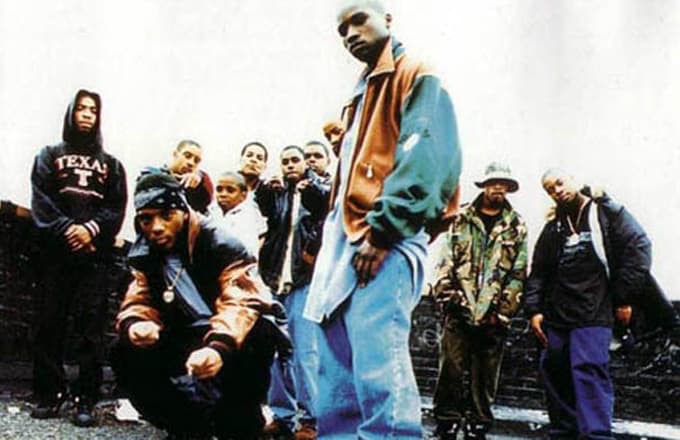
RIP Prodigy. I’m shocked and saddened by his loss. He may not be in everyone’s top ten, but Prodigy was one of the most important hip-hop artists of his generation (and still made good music after the spotlight dimmed). If you weren’t a teenager of color from New York in the mid nineties, you could be forgiven for simply viewing Prodigy and Mobb Deep through the lens of hardcore/gangsta/urban hard boiled rap.
Prodigy was adept at painting unflinching and bleak portraits of urban life that could compete with the best crime fiction, but he also spoke to an inner darkness that was deeply familiar and haunting to those of us who knew (or were) that overly reckless kid, the one who was willing to sacrifice everything for nothing.
Prodigy made a lot of entertaining music over the years, but the precision and specificity of 1995’s The Infamous, the second album he made with Havoc as Mobb Deep stands out. It’s an album that reintroduced the Queensbridge Housing Projects (the housing complex made famous by Marley Marl and the Juice Crew in the late 1980’s in songs like the Bridge) from the perspective of a younger generation of young men living the thug life. The songs exist in an uncertain realm between truth and fiction, a blend of personal experiences with second and third hand stories and traditional hardcore rap braggadocio.
The duo (joined by Rapper Noyd, Nas, Raekwon and Ghostface Killah) told stories that glorify hard life in all the expected ways, but also suggest some deeply uncomfortable realities. When I listen to The Infamous as a man in my late thirties, I’m struck by the duo’s youth and the intimate scale of the storytelling. These aren’t the gangster film inspired epics that some of their contemporaries (such as Nas himself, who debuted his ‘Escobar’ persona on the album) later made famous, but smaller stories about petty drug dealers and stick up kids.
The stakes are objectively lower – there are no massacres, kilos of cocaine or multiple life sentences – but far more meaningful. On Survival of the Fittest, Havoc reminds us that being “hit with a two to four is difficult”, and we’re reminded that any period of detention is intensely stressful and dehumanizing.
Both artists are great on this album, but Prodigy brings an unexpected pathos that helps distinguish the music from other hyperlocal hard boiled rap from that era. His verses on the Infamous weren’t just amazing because they were clever or because of his ice-cold delivery, but because they hinted at deeper truths.
We can die together As long as I send your maggot ass to the essence, I don’t give a fuck about my presence I’m lost in the blocks of hate and can’t wait For the next crab nigga to step and meet fate I’m lethal when I see you There is no sequel Twenty four/seven, Mac 11 is my peoples So why you want to end your little life like this? Cause now you bump heads with kids that’s lifeless I live by the day
Only if I survive the last night Damn right I ain’t trying to fight
-Prodigy, Right Back At You
There’s an emptiness in that last line that’s just chilling. I’ve listened to a lot of crime rap over the last quarter century, and there was no one better at capturing the tragic nihilism of teenagers living the trife life. The mix of pride, hate and despair in his voice reminds me of some of the young men I met working for an alternative to incarceration program in New York. Although the vast majority of the court-involved young people were ordinary kids who had some bad luck or made some poor decisions, there were some who were trapped in a cycle of trauma and detention that could lead to the kind of destructive pessimism we hear in Prodigy’s verses.
Most of the people I knew in my younger life who hustled were depressed. Sometimes it was obvious. Other times it was only clear in retrospect. Prodigy’s verses always reminded me of the burden that they had to carry. Who will speak for them now?
On August 15, “Straight Outta Compton”, a biopic focused on the rise and fall of N.W.A was released in theaters worldwide. As of September 13, I still haven’t seen the film, but hope to see it when it’s released on VOD.
My priors: I’m skeptical of all biopics, particularly those produced or enthusiastically endorsed by its subject(s). Even if the performances are great and the story is compelling, it’s impossible for me to ignore the giant conflict of interest. I’m always wondering if the filmmakers are avoiding controversial topics to satisfy their subject or creating a commercial for the subject that helps them develop their brand. I suspect that “Straight Outta Compton” has both problems, but I’m still looking forward to watching it, if only because the story overlaps with my memories as a fan of hip-hop music in the early nineties. I started to pay attention to the stories we tell about hip-hop around the time that N.W.A. fell and Death Row rose to prominence, so I’m all in for any story about that era or those artists, no matter how flawed.
Here are five thoughts about the phenomenon that is “Straight Outta Compton”: Continue reading →
The cover for Anaconda, the first single from the Pink Print, the third album from Nicki Minaj features the rapper crouched in a sports bra, thong bikini bottoms and Air Jordans. Her back is to the camera and she’s glancing over her shoulder.
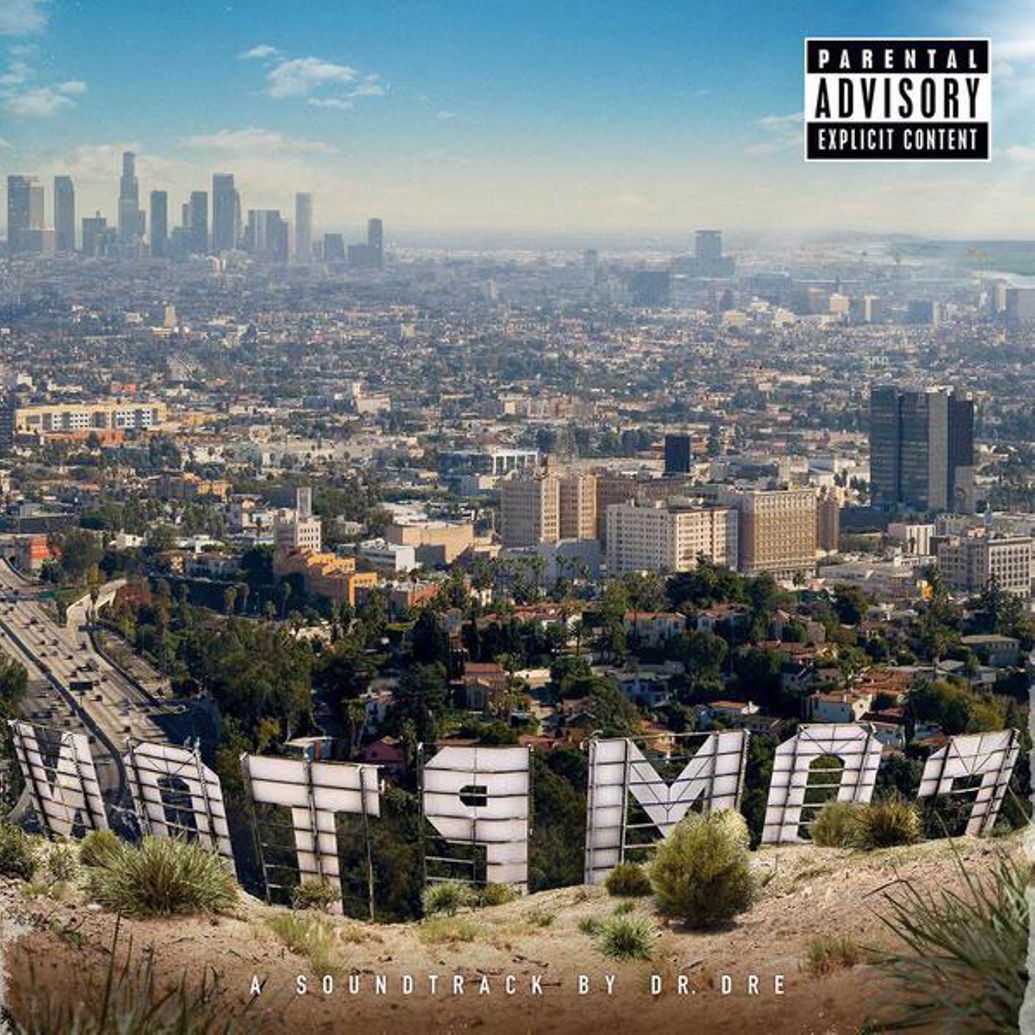
On August 1, Dr. Dre announced that his third (and final?) album, entitled Compton: A Soundtrack, was being made available for streaming over Apple’s music streaming service in less than a week. We’ve all become familiar with the ‘no advance marketing campaign’ marketing campaign since Beyoncé dropped her self titled albumwithout warning in 2013, but Dre’s announcement came as a bit of a surprise, especially for old hip-hop fans like me, who’ve been waiting for Dre’s third album when it was called Detox and was supposed to come out in 2003. During the ensuing period, I attended and graduated law school, passed the bar exam, got married and had a kid, and moved three times. If you were introduced to hip-hop around the same time that Taylor Swift and her brother started listening, you’ve never heard a new Dr. Dre album.
The one thing that I don’t love about my fifteen minute commute is that I don’t have
time to binge albums that aren’t toddler-safe. (I am aware that this is not actually a problem, and kind of sounds like a humblebrag.) I used to inhale albums the moment they were released. When I first bought Big Punisher’s Capital Punishment (from a spot in the Bronx that had the album on sale the Thursday before it was released in stores), I think I listened to the album six times during a two day stretch. When I added Kendrick Lamar’s To Pimp A Butterfly to my Google Music Library (and marked it for offline listening), it took me about two weeks to finish the album. Dre is different. Compton came out on Thursday evening and by Saturday morning I listened to the whole thing twice.




 between errors