You Always Look So Cool – Notes on Great Gatsby

Tags

, ,

Great Gatsby, 2013.

Baz Luhrmann’s films are often disparaged as celebrations of empty excess, but I’ve always thought he was a genius at using spectacle to inspire empathy for characters living in unfamiliar worlds.

His films are loud, unsubtle and tasteless. They take place in garish, beautifully designed worlds that bear no resemblance to reality and feature theatrical performances and almost comically unsubtle directing. They also do a better job of capturing the emotional truth of the source material than most adaptations of classic material. Luhrmann’s adaptation of the Great Gatsby is not good – a number of the techniques that felt innovative in earlier movies felt like hoary cliches and he was far too reliant on digital special effects – but he still did a better job of giving the audience insight into the fears, beliefs and desires of the characters than previous adaptations of the Fitzgerald original.

Some of this success can be attributed to the performances. Leonardo DiCaprio’s Gatsby is a perfect blend of Jack Kennedy and Frank Abagnale, and Carey Mulligan turns Daisy Buchanan from an elegant cipher into a tragic reminder of the limited choices upper class women had in the Jazz Age.
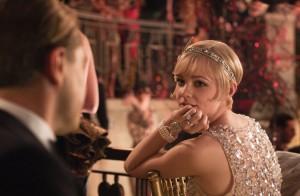
Joel Edgerton effectively captures the pitiful, callous cruelty of Tom Buchannan. I was pleasantly surprised by Maguire’s performance. This was the first time I’ve liked him since Wonder Boys. He managed to convey Nick Carraway’s passivity without becoming entirely inert (which was a real problem with Sam Waterston’s depiction in Jack Clayton’s 1974 adaptation).

But Luhrmann also deserves some credit for using music, light, costumes, set design and movement to convey emotion.
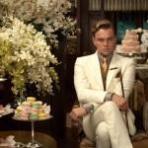
It’s the way that Gatsby’s perfectly tailored suits look like elegant couture at the first party and like a costume when he meets Daisy for a rendezvous at Nick’s house or how Luhrmann uses music, light and sound to evoke the feeling of going too far at your first party and realizing that what appeared wild and anarchic is pretty tame by the light of day.

In some ways, Luhrmann was a perfect choice as a director to adapt Gatsby. The sketchy, archetypal quality to the characters in Fitzgerald’s novel complement Luhrmann’s ongoing effort to use seemingly superficial things – style, music, movement – to suggest deeper truths in his films. Unfortunately, this message is undermined by all of the directorial tics and indulgent tendencies that he’s developed over the years.

In Luhrmann’s earlier movies, the fanciful sets helped create the sense that the viewer was in a heightened fantasy world, but in Gatsby, his computer generated New York was a distraction that robbed meaning from almost every emotionally honest moment, with the notable exception of the last confrontation between Gatsby and Tom Buchannan. It felt like the actors were performing in a Roaring Twenties video game.

There isn’t much difference between Luhrmann’s approach in Gatsby and in Moulin Rouge or Romeo + Juliet. He’s always embraced artifice and smothered performances with bombast and spectacle.

So why does Gatsby feel so unsatisfying? I think the answer lies in the difference between practical effects used in the earlier films and computer generated effects in Gatsby. There was a charm to the ornate handcrafted sets and practical effects that were lacking in Gatsby. It helped root the spectacle in a recognizable world.

Although the computer generated effects in Gatsby were an amazing technical achievement, they were also a bit mundane. Luhrmann’s impossibly perfect fantasy version of New York is the one that exists in the mind’s eye of anyone vaguely familiar with the Jazz Age. It lacks a personal touch, the idiosyncratic flair that we’ve come to associate with Baz Luhrmann movies. I also can’t help but feel like a story that’s essentially a critique of fantasy and deluded love is undermined by an idealized Jazz Age New York.
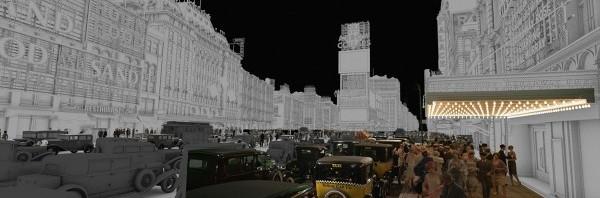
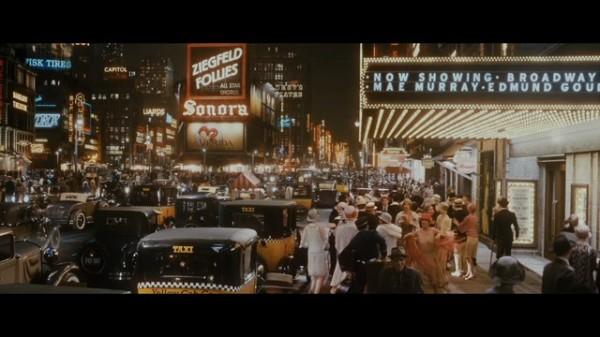
All of the familiar elements of Baz Luhrmann films are here – the migraine inducing quick cuts, the ornate sets, the inappropriate music choices – but where they once felt provocative and daring in earlier films, in Gatsby they were dull and predictable. Even the more interesting Luhrmann touches were underwhelming. The dance sequences were well orchestrated, but lacked the thrill of Moulin Rouge.

The hip-hop tinged modern soundtrack was a cute idea, but the execution was lacking – every time I heard Jay-Z, I was pulled right out of the narrative.

Is hip-hop in the 21st century the equivalent of jazz in the 1920’s? I think one can argue that it was a visceral and culturally exciting music in the eighties and nineties, but I’m not sure that it plays that role in our culture anymore. Jay-Z is an institution. He’s the status quo. Jay might’ve been a daring choice for a 1998 version of this film, but this is 2013. Jay’s the guy who represents ball players and used to own a piece of the Not-New Jersey Nets. Am I the only one who suspects that a real teenager would scoff at the idea that hip-hop is the cutting edge, hip young music of the future?

It’s a shame that Gatsby doesn’t work, because it’s clear that Luhrmann gets the class conflict at the core of the original novel. He never lets the viewer forget about the ocean of privilege between Nick and Gatsby or between Gatsby and the Buchanans. Luhrmann evokes the racial tension hinted at in the novel by including African American faces at key moments in the narrative. When Tom rambles about the primacy of western civilization, or parties with his mistress in a Manhattan hotel room, or when Gatsby is driving Nick to the city and spinning a desperate web of lies, Luhrmann makes sure that we see a black face (or several) at some point in the scene. He reminds me of the untold side of most narratives set in this era, of the people who were only heard when they were singing or playing music on a stage. The only problem is that Luhrmann shows too much of the joy and none of the pain. There was something a little bit too joyous and celebratory about the tenants at the tenement across the street from Tom’s illicit meeting place or the passengers in the car that passes Nick and Gatsby on the bridge has too many bottles of Moët. The latter scene is directly from the book, where Fitzgerald writes:

“As we crossed Blackwell’s Island, a limousine passed us, driven by a white chauffeur, in which sat three modish Negroes, two bucks and a girl. I laughed aloud as the yolks of their eyeballs rolled toward us in haughty rivalry.

‘Anything can happen now that we’ve slid over this bridge,’ I thought; ‘anything at all…Even Gatsby could happen, without any particular wonder.”

Luhrmann does a nice job with the visuals. Three people of color, two male, one female, all of whom are stylishly dressed and chaffeured by a white man (imagine the scandal!). He misses Nick’s ambivalence about class mobility (which is made more vivid when it intersects with race), the familiar discomfort that established classes have with the consumption patterns of the nouveau riche (or the nouveau middle class). Without the mocking laughter and class conflict, the moment becomes ahistorical and meaningless.

I didn’t think that Luhrmann would capture the nuance or lyricism of Fitzgerald’s novel, but I assumed that he would find a way to use his uniquely bombastic brand of melodrama to evoke the central themes of the book. Luhrmann fulfilled those expectations, but was undermined by his failure to evolve as a filmmaker. The interesting moments were drowned out by the stale ones. But I still have a soft spot for Luhrmann films. The bombast, spectacle and visual candy with a touch of camp. I hope that he finds a way to combine that zaniness with more forward thinking ideas in his future projects.

 

Respect the Architects

Tags

,

386px-stan_lee_1973

Stylin’ and Profilin’

Originally published for Funnybook Babylon on March 11, 2008

How do you sum up the career of a man who revolutionized an industry? Should you emphasize his triumphs?

When I first started reading comics, I experienced the rite of passage that any new superhero fan has to endure: the nostalgia of older readers. One of the primary paradoxes of superhero comics is that readers have to purposely ignore the long history of the title (and the characters) that produce huge gaps in narrative logic, and simultaneously learn more about the past in order to understand plot points and references. Jack Kirby and Stan Lee were far past their prime by the time I started reading, but I was constantly inundated with the competing origin myths of the Marvel Universe. At that point, the consensus was that Lee had single handedly birthed the Marvel Universe, with some assistance from interchangeable artists. In some interviews, it even seemed as though Lee endorsed this view. My father (and his childhood friends) had a very different view. In their version of events, the artists (Kirby, Ditko, Romita, Buscema) were the real visionaries, and Lee was the businessman who robbed them of their dream. This counter narrative dovetailed perfectly with their political beliefs. It was simply a story of corporate interests steamrolling creativity. The ‘man’ crushed the dreamers. The latter vision turned out to be the one that was far more popular, and was evoked in a countless number of stories about the early days of the medium, as brilliantly discussed in Michael Chabon’s The Adventures of Kavalier and Clay.

But now that we’ve all recognized the true genius of Kirby, et. al., it’s troubling to note that the pendulum has swung in the opposite extreme. In the latest Comics Journal (available for free for one week only!), Tom Crippen uses one of Lee’s most recent books, The Last Fantastic Four Story, and Jeff McLaughlin’s collection of Lee interviews, Stan Lee: Conversations, to discuss his legacy. (EDITOR’S NOTE: Crippen’s piece was published in The Comics Journal 288 published in February 2008). In the event that anyone doesn’t have the time to peruse the article, the short version is this: “At Marvel, Ditko and Kirby covered imagination and heroics; Stan covered pop-culture gimmicks, catch phrases – all the zeitgeist jabber- and he made it his business to keep the everyman angle coming through.” Essentially, his legacy is that of an ad-man, a guy who writes pithy phrases on packs of Bazooka Joe gum.

As Crippen suggests, we only have a hazy notion of the actual working environment in the heady early days of Marvel. I think that most agree that Lee played a substantial part in the creation of Marvel’s most revered characters. The real dispute is over how much of a part he really played, and whether the aspects of the characters that are appreciated today are the ones that he was chiefly responsible for. And the debate is framed by one’s view of American superhero comics, and of art as a whole. If you are an adherent of the auteur theory, it stands to reason that early Marvel was the primary creation of its resident geniuses, the artists. In that worldview, men like Stan Lee would best be described as Barnum style hucksters, or if the writer is being generous, facilitators. If one views art as entertainment, apportioning credit loses some of its importance.

Crippen, who describes Lee as a “man who puts out product for buyers”, appears to fall into the former category. He concedes that Lee was probably the man responsible for coming up with specific ideas, the man whose antennae were attuned to the cultural zeitgeist, and the man who introduced a crude early version of continuity. But he was also responsible for the blend of art and commodity that created an industry that was financially viable, but that burned out artistic geniuses and warped their brilliance to create ‘everyman’ pablum. There’s a lot of truth to that point. It’s hard to ignore the fact that Lee never forgot the fact that he was the boss, and responsible for publishing product that people were interested in buying. In that sense, it’s hard to argue with Crippen’s characterization. In that sense, he was a “lightweight”.

On the other hand, I don’t know whether a series of Stan Lee interviews resolve a more fundamental question: Was Lee an artist at all? Crippen helpfully defines the term for us, as “anyone whose primary work is exercising the imagination within an aesthetic discipline”. He refuses to put Lee in that category, and at one point argues that Lee “instigated” the early Marvel creations. But as Crippen admits, Lee developed the themes, he collaborated (or compelled under some circumstances) with artists to blend his populist outlook with their stark philosophies. Although Kirby intended the Silver Surfer was to be a distant space god, it is Stan Lee’s words, his hyperbolic dialogue, that helped burn the character into fan imaginations for decades. But the point seems to be that Lee’s efforts to market his work to a mass audience disqualified him from being an artist. “If you’re everyman, you’re in a very good place for coming up with mass-market ideas. Or you would be if everyman were good at ideas”. Something that’s easily forgotten, in what is a true Golden Age of diverse, amazing work, is how far we’ve really come. Stan Lee wrote comic books in an era where it was embarrassing to be a comics writer. In an age where the audience consisted of bored ten year olds who didn’t read the panels. So, if someone asked “real life questions about mass-media creations”, and took it seriously, it’s not easy, and it wasn’t widespread in the medium in the early 1960’s. I wouldn’t say that he “wasn’t much of a writer”, or a “lightweight”, especially in an era with so few comics writers who gave their work a second thought. Yeah, Alan Moore’s better. He did a better job of summing up Weisinger’s Superman than Lee did of summing up the Fantastic Four. I get the joke. But Moore wasn’t working in the industry in 1961. And the first hundred issues of the Fantastic Four are telling me that Lee doesn’t have to ‘sum up’ his own creations.

I’ll be the first person to tell you that Lee’s dialogue seems dated for today’s audience, or that he pales in comparison to the brilliant writers of today. Or that Kirby was the real genius. But to say that he “does not have talent”? That’s a tad too far.

(Just to note, everyone who’s even slightly interested in comics, and too cheap (or poor) to cop a subscription should go to the site now to print out some interviews. I don’t agree with their editorial stances much of the time, but you can’t hate on brilliance).

The War Zone is Everywhere

Tags

, ,

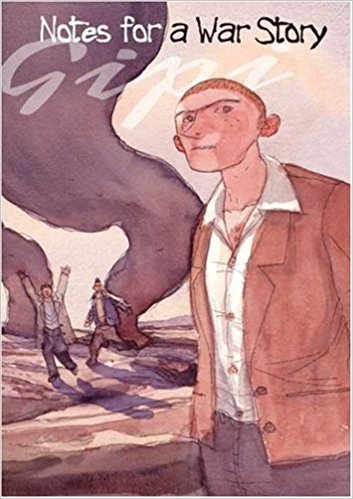
Notes for a war story cover
Notes of a War Story, produced by Gipi, and translated by Spectrum. Notes is published by First Second Publishing, an imprint of Roaring Brook Press, and was originally published as Appunti per una storia di guerra in 2004 by Coconino Press.

Gipi doesn’t tell the kinds of stories that I’m used to reading in comic books. I grew up on Marvel and DC comics, so I tend to enjoy comics that convey meaning through plot. My earliest comics are filled with dialogue and exposition that clearly explains the plot to the reader. Comics that always tell you exactly what they mean. Although many of today’s ‘mainstream’ books are more sophisticated, most are complicated (or convoluted), not complex. Gipi takes a different approach. I first became familiar with Gipi when I read Garage Band for the tenth episode of the Funnybook Babylon podcast. In Garage Band, Gipi uses ordinary moments to provide insight into the interior lives of the characters and establish a mood that made the plot feel unimportant.

The war arrived in our village on the 18th of January. Obviously there were other wars going on, but they didn’t have anything to do with us. There were wars for blacks. Wars for Arabs. Wars for Slavs. Our war started on the 18th of January, and in a few days, everything had changed.

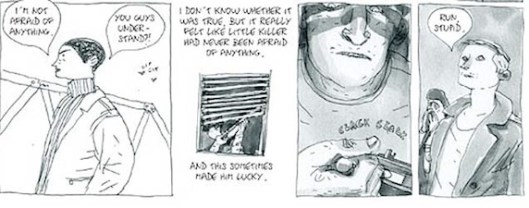
Notes of a War Story is ostensibly the story of a group of friends coming of age in the midst of an unnamed European war taking place in an anonymous Balkan nation. The lack of specificity, in time or place, gives the book a allegorical, dream-like quality. The group of three boys embody some familiar archetypes: the sycophant (Christian), the overly aggressive proto-criminal (Stefano, the “Little Killer”), and the bourgeoisie wayward one (Giuliano), who is our protagonist. The first two are representative of the lower class, both poor, one subjected to emotional (and probably physical) abuse. The third stands for the middle class. He’s the one who grows up with a lawn and a bed. The crazy one is the leader (aren’t they always?), which sets in motion a series of events that culminate in a set of life changing choices for all three.

I didn’t read the dialogue in this book until my second read. I was too busy falling in love with the images and Gipi’s visual storytelling. Gipi’s work is deceptively simple, using relatively few strokes to create distinct and expressive characters.

Notes tells several stories simultaneously. The narrative closest to the surface is about  young men getting involved in a situation that they can’t handle. But this is also a tale about the impact of war on the lives of those who are simply trying to survive in its midst. Gipi shows us a society divided between predators and prey. The people shown in Notes are either the gangs preying upon the cities, the anonymous hustlers thriving on the collapse of the social order, or those who are conspicuous by their absence. After completing Notes, it also seems that there is a narrative lurking in the background that Gipi refuses to tell, opting to only express it through oblique references. One imagines that for an artist less concerned with the fate of wasted youth, the focus of Notes could easily have been Felix, the minor gang boss that acts as a mentor to the three youths. But that is one of Gipi’s strengths. He refuses to tell every aspect of the story, to fill in all of the blanks for the reader.

The war changes the characters, and provides an opportunity for transformation. For Giuliano, the war provides an excuse for him to abandon his life. His village is severely damaged by the war, and now he is living in a world that he had only experienced through computer games. The question he faces is whether he has the skills to survive in this new world. However, for almost everyone else, the war reveals their true selves. Little Killer starts off as a kid who is trouble, the kind who starts fights, and gets suspended from school.

Killer

One envisions Stefano as the type who is both charismatic and psychotic enough to be a gang leader. But the story reveals Stefano’s hidden nature, his need for guidance, as he becomes, in the end, a willing flunky for Felix. Although Stefano and Giuliano view the other as a polar opposite, Christian is really the antithesis of both. He has neither the options of Giuliano, nor the will of Stefano, and in many ways, his story is the most tragic in this tale. He represents the masses who see conflict as an opportunity to rise above their station, without fully understanding the sacrifices that are necessary to do so. He is the true innocent of this tale, lacking the viciousness of Stefano or the self-awareness of Giuliano.

In the end, Notes is a morality play that centers around three choices that need to be made in the midst of a crumbling society. Should you bind yourself to the old society or ally yourself with the new? Will you ally yourself with the predators or the prey? Should you remain passive or take an active role in the conflict? The first two questions offer the possibility, however slim, that you can change your mind, or at the very least, pretend that no choice was made. Once you are in the front lines of a conflict, there is no turning back.

Giuliano seems to be the only character that sees this. Haunted by nightmares of his friends, who mock him for his status, and by memories of a life unmarked by tragedy, he knows that the choices that he makes limit his future options. For his friends, those limited options are the only ones that they see. In the afterword, Alexis Siegel notes the significance of the dreams in which Stefano and Christian are headless and interchangeable. Siegel links the dreams to Giuliano’s refusal to “stop thinking for himself” as well as his potential for introspection, something that the other two lack. I think it signifies their absence, that on some level, they embraced their fate the moment they left San Donato. Note that in the dream sequence, nothing was left of the two but their clothes and indistinct hands. In some ways, they were already ghosts to him.

Notes for a War Story is currently available in both comic book stores and book stores, and all images are copyright by Gipi.