Man of Steel. Directed by Zack Snyder, from a script by David Goyer.* I’m not one of those people who thinks they own Superman. He’s an idea created by Jerry Siegel and Joe Shuster and stolen by DC Comics. I don’t have any right to him, and neither do any of the many fans of the comic books, movies and live action/animated series featuring the character. It’s hard not to feel like he belongs to us. Superman’s an iconic character that’s been portrayed in thousands of stories by dozens of creators, so it’s understandable that we all have specific ideas about the character that sometimes make adaptations difficult.
Superman is an American/global symbol of justice; a populist strongman; a defender of the establishment; the ultimate immigrant who is a symbol of assimilation and/or cultural pluralism. He’s a science fiction hero and a mystery man. His brand of heroism encompasses the firefighter and law enforcement models of heroism. Some people like him best when he inspires others to do good, while others enjoy the more cosmic dream logic filled stories that emphasize his near-infinite power. It’s hard to do a Superman movie that pleases everyone, especially in an environment in which most superhero movies fit a predictable origin/existential crisis/reboot cycle. We want a movie that blends the accessibility of Superman For All Seasons with the imagination of All-Star Superman and the iconic quality of Birthright. We ask ourselves why a film can’t capture the magic of the original while forgetting that it was a charming but imperfect film.
I was looking forward to seeing Zack Snyder and David Goyer’s vision of Superman. Snyder’s Watchmen was not a good movie, but I enjoyed the elements that complicated my appreciation of the recent run of Marvel Studios movies. His heartfelt, sometimes clumsy effort to convey the politics and stakes of the original reminded me of what I was missing from movies like Captain America or the Avengers. The biggest problems with Watchmen was Snyder’s almost obsessive fealty to the original book by Dave Gibbons and Alan Moore and the horrifyingly bad performances from all involved (many of whom have been quite good in other things). In contrast, Man of Steel was an original project with performances from really good actors (Amy Adams, Michael Shannon, Diane Lane), a promising actor as Superman (Henry Cavill), and actors who are delightfully hammy in the right roles (Kevin Costner and Russell Crowe). It also had this trailer:
I knew it wouldn’t be great, but hoped that it would be good. I was wrong.
Baz Luhrmann’s films are often disparaged as celebrations of empty excess, but I’ve always thought he was a genius at using spectacle to inspire empathy for characters living in unfamiliar worlds.
His films are loud, unsubtle and tasteless. They take place in garish, beautifully designed worlds that bear no resemblance to reality and feature theatrical performances and almost comically unsubtle directing.
Luhrmann’s films are the kind of films that I imagine someone might have made during the Middle Ages. They also do a better job of capturing the emotional truth of the source material than most adaptations. Luhrmann’s adaptation of the Great Gatsby is not good – a number of the techniques that felt innovative in earlier movies felt like hoary cliches and he was far too reliant on digital special effects – but he still did a better job of giving the audience insight into the fears, beliefs and desires of the characters than previous adaptations.
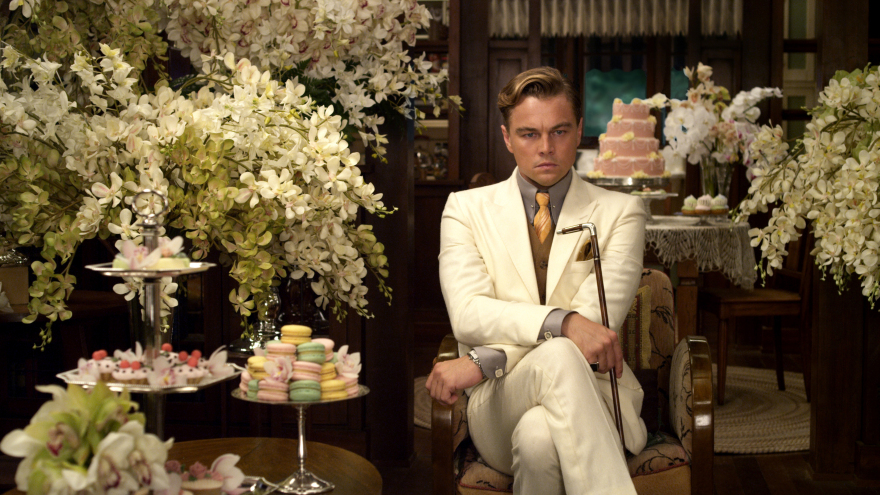
Some of this success can be attributed to the performances. Leonardo DiCaprio’s Gatsby is a perfect blend of Jack Kennedy and Frank Abagnale and Carey Mulligan turns Daisy Buchanan from an elegant cipher into a tragic reminder of the limited choices faced by upper class women in the Jazz Age.
Joel Edgerton effectively captures the pitiful, callous cruelty of Tom Buchannan. I was pleasantly surprised by Maguire’s performance. This was the first time I’ve liked him since Wonder Boys. He managed to convey Nick Carraway’s passivity without becoming entirely inert (which was a real problem with Sam Waterston’s depiction in Jack Clayton’s 1974 adaptation).
But Luhrmann also deserves some credit for using music, light, costumes, set design and movement to convey emotion.
It’s the way that Gatsby’s perfectly tailored suits look like elegant couture at the first party and like a costume when he meets Daisy for a rendezvous at Nick’s house or how Luhrmann uses music, light and sound to evoke the feeling of going too far at your first party and realizing that what you think is a wild time is actually pretty lame.
In some ways, Luhrmann was a perfect choice as a director to adapt Gatsby. The sketchy, archetypal quality to the characters in Fitzgerald’s novel complement Luhrmann’s ongoing effort to use seemingly superficial things – style, music, movement – to suggest deeper truths in his films. Unfortunately, this message is undermined by all of the directorial tics and indulgent tendencies that he’s developed over the years.
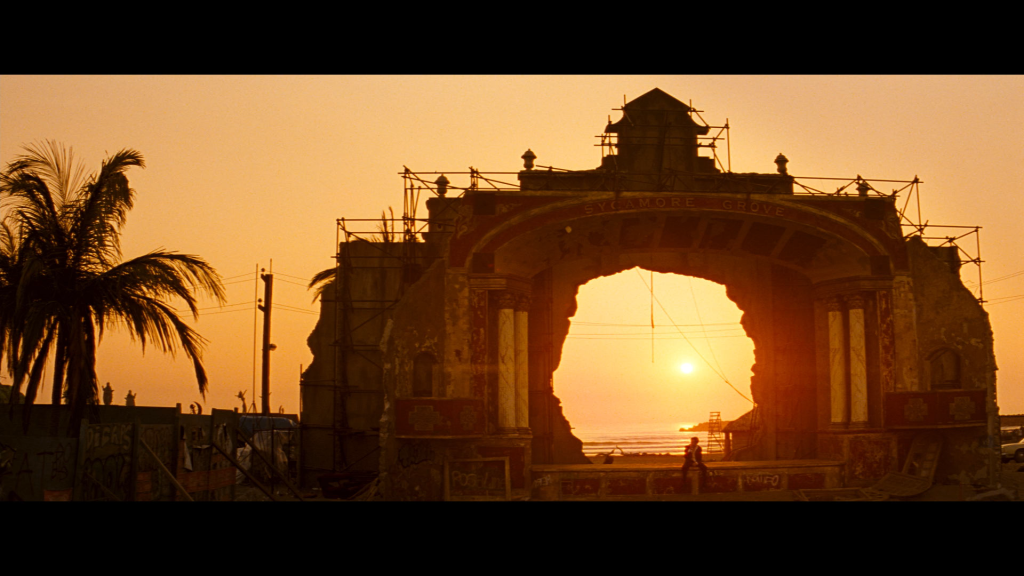
In Luhrmann’s earlier movies, the fanciful sets helped create the sense that the viewer was in a heightened fantasy world, but in Gatsby, his computer generated New York was a distraction that robbed meaning from almost every emotionally honest moment, with the notable exception of the last confrontation between Gatsby and Tom Buchannan. It felt like the actors were performing in a Roaring Twenties video game.
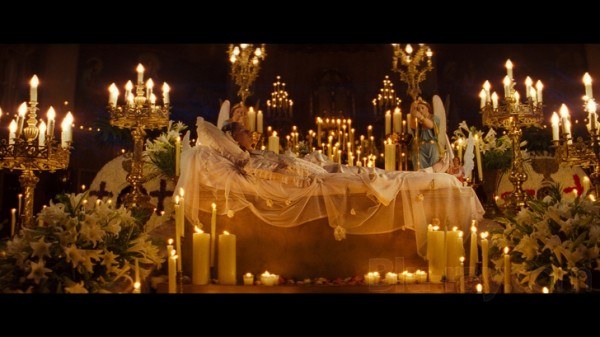
There isn’t much difference between Luhrmann’s approach in Gatsby and in Moulin Rouge or Romeo + Juliet. He’s always embraced artifice and smothered performances with bombast and spectacle. So why does Gatsby feel so unsatisfying? I think the answer lies in the difference between practical effects used in the earlier films and computer generated effects in Gatsby. There was a charm to the ornate handcrafted sets and practical effects that was lacking in Gatsby. It helped root the spectacle in a recognizable world.
Although the computer generated effects in Gatsby were an amazing technical achievement, they were also a bit mundane. Luhrmann’s impossibly perfect fantasy version of New York is the one that exists in the mind’s eye of anyone vaguely familiar with the Jazz Age. It lacks a personal touch, the idiosyncratic flair that we’ve come to associate with Baz Luhrmann movies. I also can’t help but feel like a story that’s essentially a critique of fantasy and deluded love is undermined by an idealized Jazz Age New York.
All of the familiar elements of Baz Luhrmann films are here – the migraine inducing quick cuts, the ornate sets, the inappropriate music choices – but where they once felt provocative and daring in earlier films, in Gatsby they were dull and predictable. Even the more interesting Luhrmann touches were underwhelming. The dance sequences were well orchestrated, but lacked the thrill of Moulin Rouge.
The hip-hop tinged modern soundtrack was a cute idea, but the execution was lacking – every time I heard Jay-Z, I was pulled right out of the narrative.
Is hip-hop in the 21st century the equivalent of jazz in the 1920’s? I think one can argue that it was a visceral and culturally exciting music in the eighties and nineties, but I’m not sure that it plays that role in our culture anymore. Jay-Z is an institution. He’s the status quo. Jay might’ve been a daring choice for a 1998 version of this film, but this is 2013. Jay’s the guy who represents ball players and used to own a piece of the Not-New Jersey Nets. Am I the only one who suspects that a real teenager would scoff at the idea that hip-hop is the cutting edge, hip young music of the future?
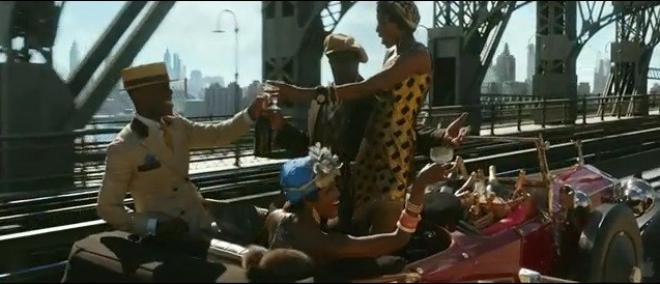
It’s a shame that Gatsby doesn’t work, because it’s clear that Luhrmann gets the class conflict at the core of the original novel. He never lets the viewer forget about the ocean of privilege between Nick and Gatsby or between Gatsby and the Buchanans. Luhrmann evokes the racial tension hinted at in the novel by including African American faces at key moments in the narrative. When Tom rambles about the primacy of western civilization, or parties with his mistress in a Manhattan hotel room, or when Gatsby is driving Nick to the city and spinning a desperate web of lies, Luhrmann makes sure that we see a black face (or several) at some point in the scene. He reminds me of the untold side of most narratives set in this era, of the people who were only heard when they were singing or playing music on a stage. The only problem is that Luhrmann shows too much of the joy and none of the pain. There was something a little bit too joyous and celebratory about the tenants at the tenement across the street from Tom’s illicit meeting place or the passengers in the car that passes Nick and Gatsby on the bridge has too many bottles of Moët. The latter scene is directly from the book, where Fitzgerald writes:
“As we crossed Blackwell’s Island, a limousine passed us, driven by a white chauffeur, in which sat three modish Negroes, two bucks and a girl. I laughed aloud as the yolks of their eyeballs rolled toward us in haughty rivalry.
‘Anything can happen now that we’ve slid over this bridge,’ I thought; ‘anything at all…Even Gatsby could happen, without any particular wonder.”
Luhrmann does a nice job with the visuals. Three people of color, two male, one female, all of whom are stylishly dressed and chaffeured by a white man (imagine the scandal!). He misses Nick’s ambivalence about class mobility (which is made more vivid when it intersects with race), the familiar discomfort that established classes have with the consumption patterns of the nouveau riche (or the nouveau middle class). Without the mocking laughter and class conflict, the moment becomes ahistorical and meaningless.
I didn’t think that Luhrmann would capture the nuance or lyricism of Fitzgerald’s novel, but I assumed that he would find a way to use his uniquely bombastic brand of melodrama to evoke the central themes of the book. Luhrmann fulfilled those expectations, but was undermined by his failure to evolve as a filmmaker. The interesting moments were drowned out by the stale ones. But I still have a soft spot for Luhrmann films. The bombast, spectacle and visual candy with a touch of camp. I hope that he finds a way to combine that zaniness with more forward thinking ideas in his future projects.
When I was infected by hip hop for the first time, I mostly paid attention to the mcs. It was all about Rakim and Kane and KRS ONE. I loved a good beat, but it played second fiddle to a dope verse. It wasn’t until I listened to 3 Feet High and Rising and Enter the Wu Tang for the twentieth time (sometimes I miss the technical limits of the cassette era – being forced to listen to a set of tracks in a defined order on a regular basis really helps you become intimately familiar with every element of each song) that I really noticed how producers like Prince Paul and the RZA weren’t just providing a great track for the mc to ride, but shaping the way listeners experienced the album.
I don’t like to review the first issue of a comic series, especially if the story’s not self contained. It feels too much like reviewing the first chapter of a book, the first half hour of a film or the first episode of a serialized tv show. I’m never sure if any problems I have with the story or the execution will be resolved or disappear as the story progresses. Sometimes creators just need space and time to figure things out. I’ve read any number of disappointing comic series with transcendent first issues and amazing series that had a slow start. So why not wait? Because the analogy between comics and other art forms has a limit. The industry and culture of comics are fundamentally different from television, books and film. Movies and books are (mostly) produced and sold as singular objects. We might consume them piecemeal, but the only thing wasted by a ‘wait and see’ approach to the story is time. Although television episodes and comic book issues can be appreciated as discrete works of pop art or as components of a larger story, most people still buy TV shows via a subscription to a network or streaming service. Comics are different. While subscription services, stand alone graphic novels, story collections and free/ad-supported webcomics are growing in prominence, there are still an awful lot of comics produced and sold in the individual issue format at three to five dollars a pop. It’s hard to wait for things to improve if it’s costing you money. Readers can wait until an arc is completed, but the ‘Wednesday Warrior’ culture that has developed around the Direct Market also exerts social pressure on readers to read and discuss comics as individual issues. It’s hard to be patient and wait for a book to get better.
Well. That was certainly a long commercial break, but we’re back. For those who may have forgotten (and who could blame you!), I’m Jamaal. Here’s a quick recap.
I’m a co-founder of the Funnybook Babylon podcast and blog (we had things to say about comic books). I also tumbl about things at Infected Worldmind. About two years ago, I realized that I had things to say about the broader world of pop culture, so I started a separate wordpress blog. In the fall of 2014, I moved from the Bronx to New Haven (Connecticut) and my blog was hacked. All of my efforts to repair the blog were unsuccessful, so I decided to start a new blog in November 2014. What happened next?
On a fine day last week month in New Haven, I was talking comics on twitter with some friends while waiting for my train to move. The topic was DC Comics’ decision to reintroduce the Huntress (a female vigilante) as a woman with brown skin. If you’ve been following DC’s rebooted New 52 universe, you’ll know that the Huntress was originally re introduced as the daughter of Batman and Catwoman from a parallel universe. This new version of the character is an updated take on Helena Bertinelli, the daughter of a mob boss familiar to both fans of the DC universe that preceded the new 52 and fans of the Arrow television show.
Meghan Hetrick-Murante’s Huntress
Helena Wayne Huntress (George Perez)
Classic Huntress (Thomas Castillo)
Arrow Huntress (Jessica de Gouw)
This decision closely followed DC’s decision to reintroduce Wally West (a character who was Caucasian in earlier incarnations) as an African American. During the conversation, a good friend of mine expressed some concern about DC’s decision to fundamentally change existing characters and mournfully noted that reboots mean that no one ever exists anyway. The comment reminded me that I’ve felt disconnected from DC titles since it’s recent reboot, which led her to suggest that we still feel an emotional connection to the characters even though we all say ‘follow creators not characters’.
On a recent episode of Wait, What?, Graeme and Jeff discussed Jeff’s superhero/adventure comic ennui. (Editor’s Note: This is the best comics podcast since that other one. Become a patron via Patreon.) During the conversation, Graeme suggested that one of the reasons that Jeff found it hard to maintain interest in superhero and adventure comics not published by Marvel and DC was that he didn’t have an emotional/nostalgic connection to the characters in the book. Although Jeff’s lack of interest seemed to be driven by evolving genre preferences and his concern that the superhero/adventure books were part of a broader brand marketing strategy designed to separate readers from their cash, something about Graeme’s suggestion resonated with my own experience. I enjoy a number of the superhero and adventure books published by Image, Dark Horse, Valiant and Dynamite, but I tend to drop (or lose interest in) these titles far more frequently than lesser titles published by Marvel and DC. I love Fred van Lente and Jeff Parker, but frequently have to remind myself to pick up their non-big two superhero books.
Since I became a regular superhero comics reader again in the mid aughts, I’ve been more interested in creators and creative teams than individual characters. I’ve also banged the ‘creators over characters’ drum to everyone I knew who read superhero books. At the same time, I have to admit that I would be more entertained by a great story featuring a Superman analogue if it actually featured Superman. I’m more likely to buy a pretty good X-Men book than a fantastic issue of Harbinger, Valiant’s answer to the X-Men. Does this complicate (or undermine) the idea that creators should be more important than characters?
I don’t think it does. First, I don’t think that my interest in Superman stories necessarily implies any loyalty towards ‘Superman’ as a character or brand. I respect people who love the characters as characters, but sometimes that love looks an awful lot like simple brand loyalty. If someone is into Spider Man because the character’s story and values resonate with something in their lives, that’s great for them. It’s not the equivalent of self-identifying as a Cap’n Crunch super fan. But it’s hard to ignore the fact that the media conglomerate that owns Spider Man views people who identify as Spider-Man qua Spider Man fans as the “fiends they’re accustomed to serving“.
When I say I love Superman, I’m expressing fondness for stories featuring the character that explore the themes we associate with the Superman narrative. I’m interested in how stories by Greg Pak and Aaron Kuder or Geoff Johns and John Romita, Jr. resonate with earlier stories by creative teams as varied as Grant Morrison and Frank Quitely, Mark Waid and Leinil Yu, John Byrne or Elliott Maggin and Curt Swan. I don’t care if “Superman” is married or single. I don’t care if “Wolverine” dies, but I am interested in how a story by Paul Cornell and Ryan Stegman build on a prior story by Jason Aaron and Ron Garney and an even earlier set of stories by Chris Claremont and Frank Miller in a fictional universe with tighter continuity. When I’m faced with a choice between X-Men and Harbinger, I don’t think that I’m simply expressing loyalty to my favorite brand if I choose X-Men.
I value those stories, but also recognize that the people behind them are more valuable.
An Aside: I guess that’s why I was surprised by my general lack of interest in DC’s most recent reboot. I’ve always been able to roll with the punches in the past, but there’s something about this one that leaves me cold, and it’s not just because most of the books aren’t any good. I know that all reboots are driven by a mix of commercial (expand the audience by making the books accessible to new readers) and creative (give storytellers opportunities to tell stories unburdened by decades of continuity) reasons, but the New 52 (which was preceded by two other recent reboots) just felt like more of a pure marketing campaign, the end-result of an ambitious junior executive’s corporate synergy strategy.
When I tell people to value creators more than characters, I’m trying to express a simple idea: people are more important than property, even if the property is entertaining. It’s not supposed to serve as a blanket condemnation of readers who enjoy books featuring their favorite Marvel or DC character or who have some emotional connection to the characters. It’s more of a friendly (and easily misunderstood) reminder that storytellers are more important. A nudge to get readers to think more about creators and question the degree to which we’ve aligned our perspective on the art form with that of media corporations and become shareholders with no equity. But I’m not sure that’s a good enough explanation. What do I really mean when I argue that creators are more important than characters?
We need more explorations of intimacy on television. Sometimes it feels like almost all of the prestige dramas in the so-called second golden age of television – shows like The Sopranos, The Wire, Deadwood, Mad Men, Breaking Bad – were extended meditations on aggressive masculinity and physical and emotional violence that relegated other experiences to the margins.
Hold the Fuck Up – Duke Da God ft. Juelz Santana + DJ Clue
Nao/Now – Kev Brown
The Bottle – Cookin’ Soul X Gil-Scott Heron
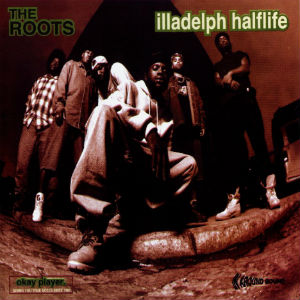
Wholy Holy – The Roots ft. John Legend
Comics Quote of the Week
[W]e need to … stop looking at the comics market as the “big two” or the “big three.”
There are only two kinds of comics that matter: good comics and bad comics.
Everything else should be irrelevant.
So stop letting publishers lie to you and deceive you and your readers so they can prop up their position in this industry in their craven attempts to appease shareholders.
That may help them in the short-term, and maybe it puts an extra couple coins in your change purse at the end of the week, but the reality of the situation is they have literally everything BUT your best interests at heart.
-Eric Stephenson, publisher of Image Comics. From his comments at ComicsPRO, the comics retailer trade association. via ComicsBeat.
Great speech. For some reason, I imagined this in Killa Mike’s voice (from the introduction to his I Pledge Allegiance to the Grind II mixtape). There’s a temptation to focus on his critiques of Marvel and DC, but I’m most interested by his comments on licensed properties. Although I think that original properties native to comics should be the ideal, I’m not entirely sure that it’s fair to characterize licensed comics as ‘lesser’ versions of the original. Sure, there are some blatant cash grabs, but there are some amazing, sublime books – like Christos Gage and Antonio Fuso’s GI Joe: Cobra series or Max Brooks, Howard Chaykin and Antonio Fuso’s GI Joe: Hearts and Minds series – both of which were far superior to the original animated series.
A few more thoughts:
These speeches about the state of the American comics industry remind me that Marvel and DC aren’t in the same business as other publishers. they’re units of larger cultural conglomerates that are primarily interested in maximizing the income from their legacy characters in multiple media. Retailers should always be aware that the long term health of the industry and the art form aren’t the priority of either ‘publisher’.
I’ve always thought that the music industry’s problems were related to its failure to fulfill the desire of listeners for disaggregated inexpensive content and it’s overestimation of consumer willingness to keep repurchasing music in different formats. Yeah, the relentless strip mining of the past was a problem (and a poor investment of resources), but I’m not sure that it drove fans away.
It’s good to hear a straightforward defense of the direct market that’s not entirely rooted in sentiment or nostalgia. I complain a lot about comics retailers, but there’s no denying that they have a critically important role to play in the future of the American comics industry. I’m a huge fan of digital comics, but it’s hard to ignore the high barriers to entry for less affluent or younger readers who don’t have access to tablets or smart phones.
I never completely understood why Saga receives near-universal, almost rapturous praise from its supporters. Saga is a interesting, well made book, but it never struck me as particularly brilliant or transcendent. After reading Stephenson’s comments, I think I get it. Saga’s commercial and critical success helps us imagine a post- Big Two Direct Market that holds on to a non-trivial percentage of exclusively Marvel/DC readers. There have been a number of incredibly successful and widely popular non-superhero comic books not published by Marvel or DC over the last few decades, but Saga is one of the few that captures the visceral thrill of reading superhero comics without referencing the genre at all (Kirkman’s Walking Dead is another notable example). It doesn’t hurt that Brian Vaughan and Fiona Staples have maintained the high quality of the book while adhering to a regular schedule, or that they seem to have the ideal partnership between writer and artist. There’s always been some tension between those who argue that there is a silent majority of fans hungry for mainstream books that are not Marvel/DC superhero books and those (especially risk-conscious retailers) who are reluctant to alienate the fans who comprise the bulk of their customer base. Saga suggests a positive sum solution – a story that appeals to non-traditional audiences while providing the high stakes serialized action and melodrama that superhero readers love.
Images of the Week
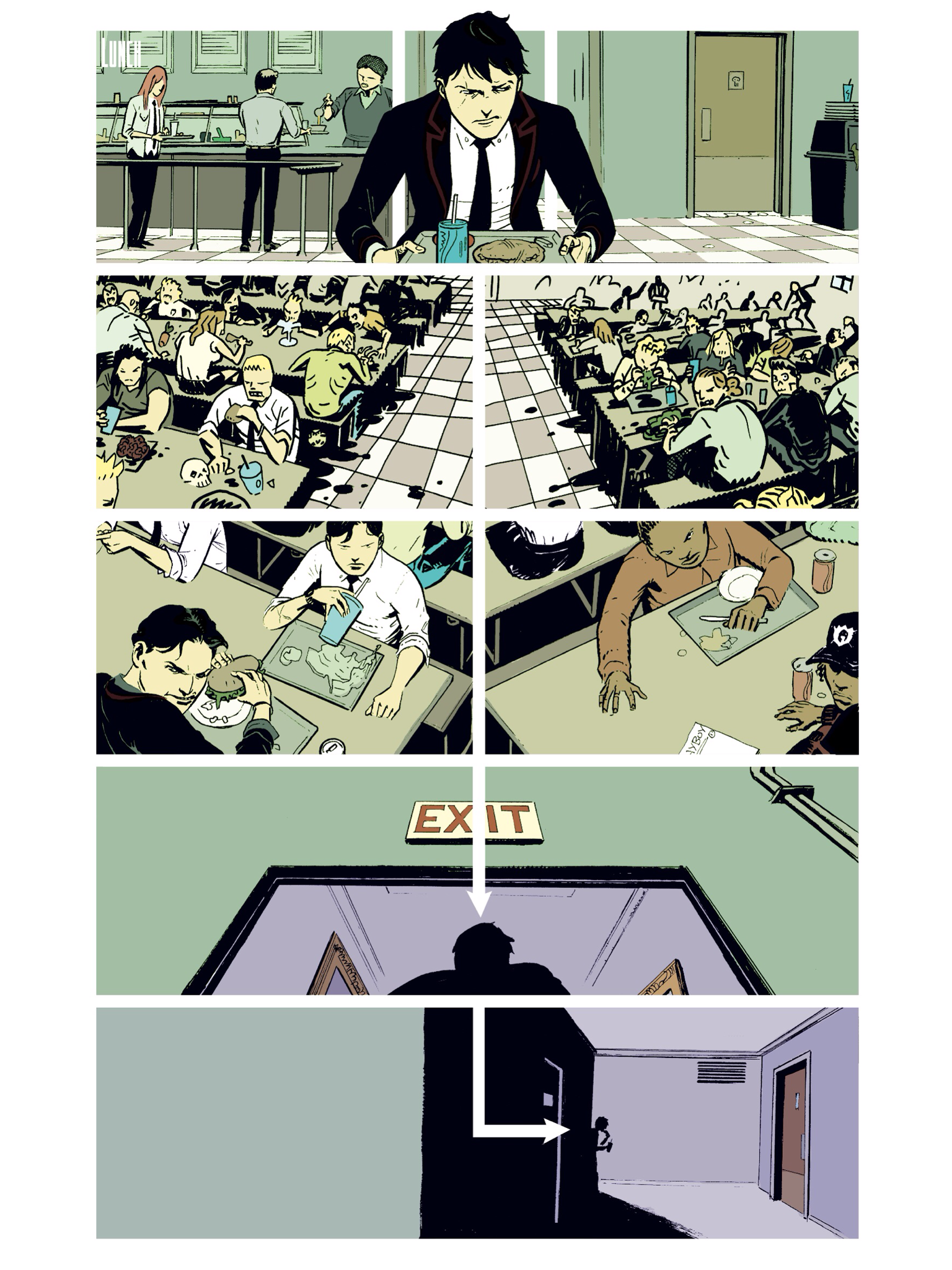
-Wes Craig, color art by Lee Loughridge, Deadly Class #2. Story by Rick Remender. I love Craig’s use of the panel borders to direct the reader.
-Fiona Staples, Saga #18. Words by Brian Vaughan. Staples’ art is even more impressive when you focus on a single page. You can get lost in every detail.
Recipe of the Week
A mediocre picture of a delicious dinner – salmon pastrami on rye with red cabbage and green apple slaw, via Blue Apron. Not pictured: a side of Nathan’s french fries. I was given a free week of Blue Apron as a gift from a friend during my parental leave and soon became addicted. Every week, the company sends the ingredients and recipes for three interesting meals for two people. My life felt impossible to manage during the first few months of parenthood, and it was nice to not have to think about what I was going to have for dinner for a few days a week. Other than the salmon pastrami on rye (which turned out great even though it didn’t really evoke the tastes I associate with ‘pastrami’), some highlights have included the roast beef with horseradish sour cream and heirloom carrots, the Moroccan Beef Tagine with dates and honey, Seared Cod with Kaffir Lime Juice, and Chicken Supremes & Broccolini
with Forbidden Rice, Pepitas, & Mustard Sauce. I have a few quibbles with Blue Apron – it’s pasta recipes tend to be underwhelming for cooks with pasta experience and they don’t offer customers who select the ‘omnivore’ option an opportunity to opt out of pork dishes – but it’s typically worthwhile.
-Pierre Bennu. Inspired by (and featuring music from) Nicki Minaj’s Lookin’ Ass Nigga. The password is “selfhate”. via egotrip. I didn’t find the original video (or Nicki’s appropriation of the image we associate with Malcolm X) particularly offensive (I grew up listening to the first wave of gangsta rap in the late 80’s/early ’90’s after all), but I love Bennu’s response. We can play with offensive, taboo language and imagery all we want, but we should never forget what they actually mean.
Podcast of the Week
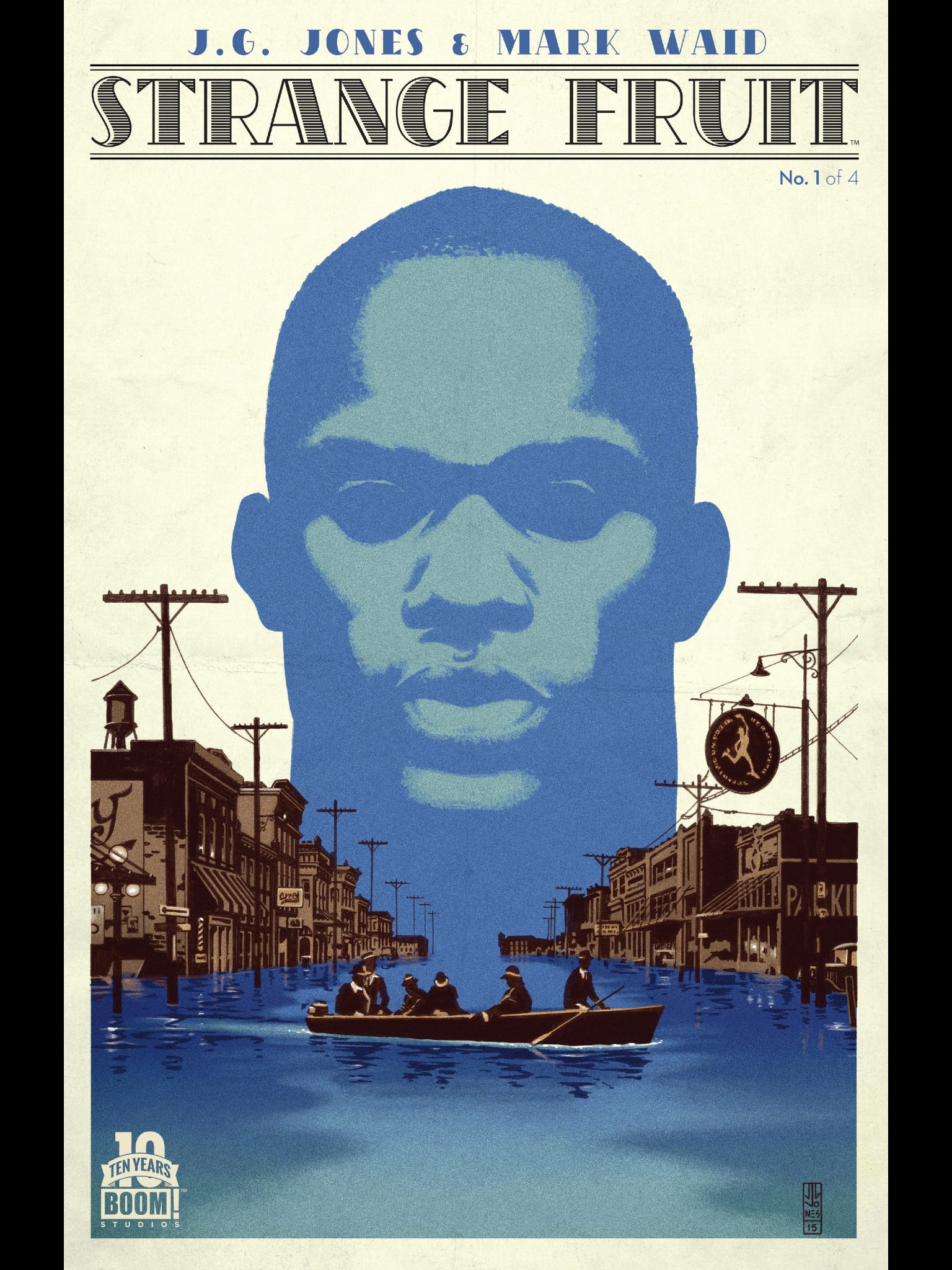
David Brothers continues his excellent Inkstuds Spotlight series with interviews of Spike Trotman, Jay Potts and LeSean Thomas (the last one is great for those curious about a career in animation). Check it out.
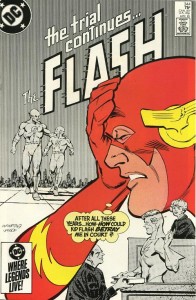
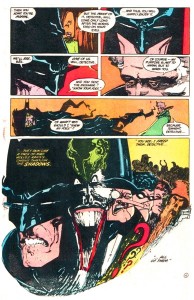
I started reading DC Comics as the Bronze Age was coming to an end. Barry Allen stood trial for the murder of Reverse Flash. Guy Gardner was officially inducted into the Green Lantern Corps. R’as al Ghul emptied Arkham Asylum and Gotham State Penitentiary in an effort to force Batman to join his crusade to save the world from itself and Superman starred in a series of weird high concept imaginary stories.
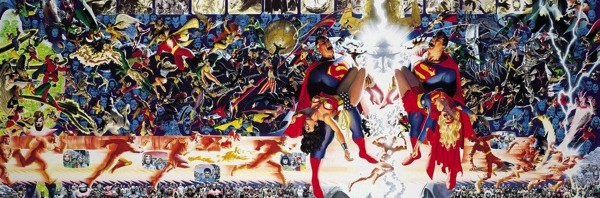
Just as I started to develop an affinity for these characters and their delightfully messy universe, their stories ended.
I caught a screening of The Carter, the Sundance Award winning documentary produced by Quincy Jones III (a/k/a QDIII) and directed by Adam Bala Lough at a local theater about nine years ago, on the day before my birthday. I’ve never been connected enough to get invited to a private screening, but one of my best friends (the filmmaker/artist/entrepreneur Lyndon McCray) had the connections an an extra pass, so I got the opportunity to watch the doc and attend a Q&A with Mr. Jones 1 in a theater setting. I didn’t think that I would be among the few to watch The Carter in a theater. Although the film became a hit on digital streaming and home video (and became one of the most critically acclaimed pop music documentaries of all time), it never had a run outside the festival circuit and was tied up in years of litigation between Wayne and the film’s producers.
I wrote some thoughts on the documentary for my tumblr later that month, a modified version of which follows below. At the time I wrote the post, Wayne was at the height of his powers. When he described himself as ‘the best rapper alive’, very few (other than the purists) laughed. In the four years that followed, Wayne served some time on a weapons possession charge in New York and released four more studio albums – Rebirth, I Am Not A Human Being Iand II and Tha Carter IV. He’s also released an impressive number of mixtapes. Almost every song on each album/mixtape is slightly disappointing – his lyrics are less focused and his delivery has become generic. His forays into other genres (Rebirth was his rock album and he’s done a bit of auto tuned crooning) have been unsuccessful. He’s less relevant but he still moves units. I don’t think anyone outside of Wayne’s crew and family thinks that he’s the best rapper on Cash Money/Young Money, let alone the ‘best rapper alive’.
The Carter is a brilliant documentary that follows Lil’ Wayne on the road in the months before the release of tha Carter 3 and ends shortly after the album proves to be a monumental success. During a period when some of his contemporaries were struggling to combat irrelevancy and piracy, Wayne was one of the few rappers (along with Jay-Z, 50 and Kanye) who figured out how to thrive in the mid-late aughts. Jones told the audience in the post-screening Q&A that one of the reasons that he pursued documentary film was to expose the general public to the artistic brilliance of hip-hop, and this film embodies that goal in ways that are admirable and slightly unsettling. The admiration that the folks behind the film have for Wayne is apparent from the first scene, but Jones and Lough avoid a hagiographic approach or the standard ‘rise and fall’ narrative to simply observe Wayne in his natural environment. I appreciated that they chose to avoid the direct cinema approach – with a subject like Wayne, it might have come off as too artificial. Wayne frequently addresses the camera directly, and the viewer is constantly reminded that the cameras are only present at Wayne’s pleasure. Everyone portrayed in the film is, from his nameless entourage to his manager, his daughter, hell, even to Bryan ‘Baby’ Williams (Wayne’s ‘father’/mentor/future nemesis/co-founder of Cash Money) is expendable. Because if there is one message that this movie sends the audience, it’s this: Wayne doesn’t need anyone. As a result, Lough’s fly on the wall approach – one that we typically associate with a sense of intimacy – creates distance between the viewer and the artist.
Here are some things that we do learn about Wayne from this documentary:
1. Wayne may have a substance use disorder.
The movie begins with the humorous revelation that Wayne enjoys marijuana. Throughout the rest of the movie, we are treated to a number of scenes featuring Wayne with a blunt, and a lot of frank discussions about drug addiction and substance use. Wayne’s troubling abuse of “syrup” (a concoction made of soda and cough syrup (which contains codeine and promethazine) that contributed to the deaths of DJ Screw and UGK’s Pimp C) is directly addressed a number of times, most poignantly by his childhood friend and manager Cortez Bryant. There are very few scenes of the movie that don’t feature Wayne and a Styrofoam cup filled with syrup, and we are treated to his preparation of the drink on several occasions. The Wayne/syrup controversy is well-known in the rap community, but there’s a real difference between knowing and witnessing. 1 Wayne’s substance use haunts the film. It informs everything that we see and subverts the story that Jones and Lough intend to tell.
The films forthright depiction of substance use has its limits. We hear Bryant’s perspective on Wayne’s syrup use, but we don’t see the larger context. A number of mcs from the first generation of artists signed to Cash Money – Wayne’s earliest colleagues and mentors – have struggled with addictions to heroin, cocaine and/or syrup. There have been persistent rumors that the label’s founders (Baby and his older brother Ronald “Slim” Wiliams) were involved in drug trafficking – some suggest that the label was started with illicit funds as a money laundering scheme and others suggest that the label was a front for ongoing activity. There are darker rumors suggesting that Baby and Slim supplied their artists with drugs and encouraged their habits in order to financially exploit them (an impaired artist is less likely to notice if they’re being shorted on a royalty payment or a check for a live performance). I’m not sure if there were any moments in the film in which Wayne was not intoxicated and the audience is left to speculate how his substance use influenced his behavior.
2. Wayne is alone.
Wayne is surrounded by people for much of the film, from journalists to label-mates to the aforementioned anonymous entourage. It evoked the feeling of being alone in a crowd of people. In one scene, Bryant confidently tells the viewer that Wayne is alone on his tour bus, quickly followed by a cut to Wayne surrounded by his entourage on the bus. We’re meant to think that Bryant is hilariously out of touch, but his statement felt true. Wayne is in a room filled with people, but he is completely alone. He ignores the flunkies and friends surrounding him to focus on meticulously mixing his drinks or displaying exaggerated bravado. I was struck by the quietness of a scene where Wayne and his crew were half-watching ESPN. There’s none of the raucous cross-talk that you might expect from friends watching sports highlights. Wayne does talk, but mostly to himself. This may have been a deliberate choice by the filmmaker, but there are a number of scenes with a similar tone.
3. Wayne is a musical genius.
“Repetition is the father of invention.” – Lil’ Wayne.
It’s difficult for a filmmaker to capture the ineffable process of making music, especially if one’s trying to do so for a rapper. Watching someone’s brow furrow as they think of a clever line is not anyone’s idea of compelling viewing. Filmmakers grapple with this in a number of ways – by having the artist explain the meaning behind his lyrics, or demonstrate rhythmic patterns/wordplay (think Jay-Z on 60 Minutes). The Carter solves this problem by showing how hip-hop has consumed Wayne’s life. We watch him record almost constantly – in studios, in hotel rooms, and on his tour bus. We listen to Wayne’s charming (but sometimes painful) efforts to play instruments and sing. Most importantly, we listen to Wayne rhyme.
In the world outside The Carter, there are a lot of distractions that impede a full appreciation of Wayne as a lyricist, ranging from personal controversies (see above and his impending incarceration for a gun charge) to his style of rhyming (he raps briskly, with verses that tend to overlap, and punchlines that follow one another in quick succession). The Carter helps those unfamiliar with Wayne’s music understand him by displaying verses on the screen, and showing Wayne rhyme without accompaniment. The former is occasionally distracting (and detracts from the verite vibe of the doc), but listening to Wayne perfect a part of his verse, repeating it at different speeds, alternating cadences, adding/removing words … is amazing.
Wayne is a perfectionist and a workaholic, and the film does a great job of portraying that, particularly in the scenes at the Hit Factory. I’ve heard a lot of Wayne’s songs, and have always appreciated their spontaneous, almost rushed quality. Wayne usually sounds as if he’s in some kind of fugue – he’s not quite freestyling, but he’s in some quasi-ecstatic state, blending the profound and the profane. The Carter taught me that this is entirely (or mostly) a calculated effect. Although Wayne alternates between boredom and provocation in the junket interviews, he becomes animated when explaining what he does – he may spontaneously dream up fragments of verses, but continually refine them until they achieve his goal. It’s craftsmanship masquerading as inspiration. Wayne tells the camera that constantly recording relieves mental pressure, that his mind is so filled with ideas that he needs this outlet for release. That may be partially true, but it shouldn’t distract from appreciating the craft behind his music.
In the Q&A, someone compared this movie to the famous Bob Dylan documentary, Don’t Look Back. I think that argument holds merit in more ways than one. Dylan was always an artist that confounded audiences and critics by appearing to be whatever they imagined, whether hippie, genius, or prophet. Wayne carries on with this tradition – at the end of the film, you don’t know very much more about the man than you did when you came in.
1. In a perfect world, every movie would end with a Q&A. A few years ago, the woman to whom I am related by marriage and I saw Good Dick, which featured a great Q&A with Jason Ritter and Marianna Palka. Since then, I’ve really developed an appreciation for them. In a really perfect world, Elvis Mitchell and Terry Gross would magically appear to do these panel discussions.
↩2. Just as an aside, I really think that the movie highlights the pitfalls of treating substance abuse/addiction as a moral failing, character flaw, or a crime instead of a problem that needs to be solved. Even though Wayne’s emotional issues (and the addictive qualities of syrup) are probably the main reason he can’t stop using, I think that popular conceptions about addiction in the black community contribute to the problem. We associate drug use with failure, with an inability to function as workers/family members in society. We don’t condemn drug use because it’s harmful to your health, or because addiction tends to be an indicator of deeper emotional/psychological issues, but because it hampers productivity. So if you’re a successful, highly productive person, you don’t associate yourself with the homeless crack-addicted person on the corner, even if you exhibit the same addictive behavior. There’s a point in the doc when Wayne bellows (paraphrasing) “Could a junkie do this?” Probably not. But it’s hard to imagine Wayne at 40, or 50. How long can he live like this? For a fascinating discussion about uncoupling crime from morality, listen to this interesting diavlog between Mark Kleiman and Reihan Salam (crime, punishment and incentives), and between Kleiman and Megan McCardle (substance abuse and addiction). Check out Kleiman’s intriguing book, When Brute Force Fails: How to Have Less Crime and Less Punishment here.↩














 between errors