• About

between errors

~ Tough Love For Everything

between errors

Category Archives: Comics Criticism

Storytellers Up, Characters Down (If Superheroes Can’t Swim, They’re Bound to Drizown…)

15 Tuesday Jul 2014

Posted by jml78 in Comics Criticism, Uncategorized

≈ Leave a comment

Tags

DC Comics

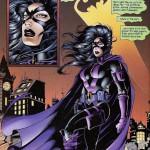
On a fine day last week month in New Haven, I was talking comics on twitter with some friends while waiting for my train to move. The topic was DC Comics’ decision to reintroduce the Huntress (a female vigilante) as a woman with brown skin. If you’ve been following DC’s rebooted New 52 universe, you’ll know that the Huntress was originally re introduced as the daughter of Batman and Catwoman from a parallel universe. This new version of the character is an updated take on Helena Bertinelli, the daughter of a mob boss familiar to both fans of the DC universe that preceded the new 52 and fans of the Arrow television show.

Meghan Hetrick-Murante’s Huntress
Helena Wayne Huntress (George Perez)
Classic Huntress (Thomas Castillo)
Arrow Huntress (Jessica de Gouw)

This decision closely followed DC’s decision to reintroduce Wally West (a character who was Caucasian in earlier incarnations) as an African American. During the conversation, a good friend of mine expressed some concern about DC’s decision to fundamentally change existing characters and mournfully noted that reboots mean that no one ever exists anyway. The comment reminded me that I’ve felt disconnected from DC titles since it’s recent reboot, which led her to suggest that we still feel an emotional connection to the characters even though we all say ‘follow creators not characters’.

On a recent episode of Wait, What?, Graeme and Jeff discussed Jeff’s superhero/adventure comic ennui. (Editor’s Note: This is the best comics podcast since that other one. Become a patron via Patreon.) During the conversation, Graeme suggested that one of the reasons that Jeff found it hard to maintain interest in superhero and adventure comics not published by Marvel and DC was that he didn’t have an emotional/nostalgic connection to the characters in the book. Although Jeff’s lack of interest seemed to be driven by evolving genre preferences and his concern that the superhero/adventure books were part of a broader brand marketing strategy designed to separate readers from their cash, something about Graeme’s suggestion resonated with my own experience. I enjoy a number of the superhero and adventure books published by Image, Dark Horse, Valiant and Dynamite, but I tend to drop (or lose interest in) these titles far more frequently than lesser titles published by Marvel and DC. I love Fred van Lente and Jeff Parker, but frequently have to remind myself to pick up their non-big two superhero books.

Since I became a regular superhero comics reader again in the mid aughts, I’ve been more interested in creators and creative teams than individual characters. I’ve also banged the ‘creators over characters’ drum to everyone I knew who read superhero books. At the same time, I have to admit that I would be more entertained by a great story featuring a Superman analogue if it actually featured Superman. I’m more likely to buy a pretty good X-Men book than a fantastic issue of Harbinger, Valiant’s answer to the X-Men. Does this complicate (or undermine) the idea that creators should be more important than characters?

I don’t think it does. First, I don’t think that my interest in Superman stories necessarily implies any loyalty towards ‘Superman’ as a character or brand. I respect people who love the characters as characters, but sometimes that love looks an awful lot like simple brand loyalty. If someone is into Spider Man because the character’s story and values resonate with something in their lives, that’s great for them. It’s not the equivalent of self-identifying as a Cap’n Crunch super fan. But it’s hard to ignore the fact that the media conglomerate that owns Spider Man views people who identify as Spider-Man qua Spider Man fans as the “fiends they’re accustomed to serving“.

When I say I love Superman, I’m expressing fondness for stories featuring the character that explore the themes we associate with the Superman narrative. I’m interested in how stories by Greg Pak and Aaron Kuder or Geoff Johns and John Romita, Jr. resonate with earlier stories by creative teams as varied as Grant Morrison and Frank Quitely, Mark Waid and Leinil Yu, John Byrne or Elliott Maggin and Curt Swan. I don’t care if “Superman” is married or single. I don’t care if “Wolverine” dies, but I am interested in how a story by Paul Cornell and Ryan Stegman build on a prior story by Jason Aaron and Ron Garney and an even earlier set of stories by Chris Claremont and Frank Miller in a fictional universe with tighter continuity. When I’m faced with a choice between X-Men and Harbinger, I don’t think that I’m simply expressing loyalty to my favorite brand if I choose X-Men.

I value those stories, but also recognize that the people behind them are more valuable.

An Aside: I guess that’s why I was surprised by my general lack of interest in DC’s most recent reboot. I’ve always been able to roll with the punches in the past, but there’s something about this one that leaves me cold, and it’s not just because most of the books aren’t any good. I know that all reboots are driven by a mix of commercial (expand the audience by making the books accessible to new readers) and creative (give storytellers opportunities to tell stories unburdened by decades of continuity) reasons, but the New 52 (which was preceded by two other recent reboots) just felt like more of a pure marketing campaign, the end-result of an ambitious junior executive’s corporate synergy strategy.

When I tell people to value creators more than characters, I’m trying to express a simple idea: people are more important than property, even if the property is entertaining. It’s not supposed to serve as a blanket condemnation of readers who enjoy books featuring their favorite Marvel or DC character or who have some emotional connection to the characters. It’s more of a friendly (and easily misunderstood) reminder that storytellers are more important. A nudge to get readers to think more about creators and question the degree to which we’ve aligned our perspective on the art form with that of media corporations and become shareholders with no equity. But I’m not sure that’s a good enough explanation. What do I really mean when I argue that creators are more important than characters?
Continue reading →

Nothing Will Ever Be The Same: Legion of Superheroes and Change

14 Thursday Nov 2013

Posted by jml78 in Comics Criticism

≈ Leave a comment

Tags

Legion of Superheroes

I started reading DC Comics as the Bronze Age was coming to an end. Barry Allen stood trial for the murder of Reverse Flash. Guy Gardner was officially inducted into the Green Lantern Corps. R’as al Ghul emptied Arkham Asylum and Gotham State Penitentiary in an effort to force Batman to join his crusade to save the world from itself and Superman starred in a series of weird high concept imaginary stories.

Flash_Vol_1_344-196x300greenlantern196-199x300

supermars00-198x300

Batman400-194x300


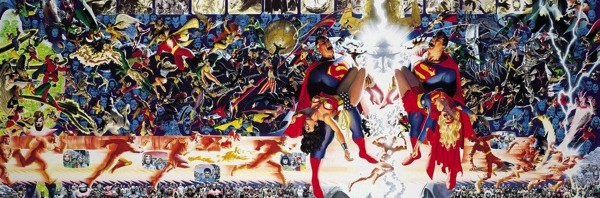
Just as I started to develop an affinity for these characters and their delightfully messy universe, their stories ended.

Alex-Ross-COIE-Collected-600x198

Continue reading →

Respect the Architects

12 Wednesday Mar 2008

Posted by jml78 in Comics Criticism

≈ 1 Comment

Tags

Marvel Comics, Stan Lee

386px-stan_lee_1973

Stylin’ and Profilin’

Originally published for Funnybook Babylon on March 11, 2008

How do you sum up the career of a man who revolutionized an industry? Should you emphasize his triumphs?

When I first started reading comics, I experienced the rite of passage that any new superhero fan has to endure: the nostalgia of older readers. One of the primary paradoxes of superhero comics is that readers have to purposely ignore the long history of the title (and the characters) that produce huge gaps in narrative logic, and simultaneously learn more about the past in order to understand plot points and references. Jack Kirby and Stan Lee were far past their prime by the time I started reading, but I was constantly inundated with the competing origin myths of the Marvel Universe. At that point, the consensus was that Lee had single handedly birthed the Marvel Universe, with some assistance from interchangeable artists. In some interviews, it even seemed as though Lee endorsed this view. My father (and his childhood friends) had a very different view. In their version of events, the artists (Kirby, Ditko, Romita, Buscema) were the real visionaries, and Lee was the businessman who robbed them of their dream. This counter narrative dovetailed perfectly with their political beliefs. It was simply a story of corporate interests steamrolling creativity. The ‘man’ crushed the dreamers. The latter vision turned out to be the one that was far more popular, and was evoked in a countless number of stories about the early days of the medium, as brilliantly discussed in Michael Chabon’s The Adventures of Kavalier and Clay.

But now that we’ve all recognized the true genius of Kirby, et. al., it’s troubling to note that the pendulum has swung in the opposite extreme. In the latest Comics Journal (available for free for one week only!), Tom Crippen uses one of Lee’s most recent books, The Last Fantastic Four Story, and Jeff McLaughlin’s collection of Lee interviews, Stan Lee: Conversations, to discuss his legacy. (EDITOR’S NOTE: Crippen’s piece was published in The Comics Journal 288 published in February 2008). In the event that anyone doesn’t have the time to peruse the article, the short version is this: “At Marvel, Ditko and Kirby covered imagination and heroics; Stan covered pop-culture gimmicks, catch phrases – all the zeitgeist jabber- and he made it his business to keep the everyman angle coming through.” Essentially, his legacy is that of an ad-man, a guy who writes pithy phrases on packs of Bazooka Joe gum.

As Crippen suggests, we only have a hazy notion of the actual working environment in the heady early days of Marvel. I think that most agree that Lee played a substantial part in the creation of Marvel’s most revered characters. The real dispute is over how much of a part he really played, and whether the aspects of the characters that are appreciated today are the ones that he was chiefly responsible for. And the debate is framed by one’s view of American superhero comics, and of art as a whole. If you are an adherent of the auteur theory, it stands to reason that early Marvel was the primary creation of its resident geniuses, the artists. In that worldview, men like Stan Lee would best be described as Barnum style hucksters, or if the writer is being generous, facilitators. If one views art as entertainment, apportioning credit loses some of its importance.

Crippen, who describes Lee as a “man who puts out product for buyers”, appears to fall into the former category. He concedes that Lee was probably the man responsible for coming up with specific ideas, the man whose antennae were attuned to the cultural zeitgeist, and the man who introduced a crude early version of continuity. But he was also responsible for the blend of art and commodity that created an industry that was financially viable, but that burned out artistic geniuses and warped their brilliance to create ‘everyman’ pablum. There’s a lot of truth to that point. It’s hard to ignore the fact that Lee never forgot the fact that he was the boss, and responsible for publishing product that people were interested in buying. In that sense, it’s hard to argue with Crippen’s characterization. In that sense, he was a “lightweight”.

On the other hand, I don’t know whether a series of Stan Lee interviews resolve a more fundamental question: Was Lee an artist at all? Crippen helpfully defines the term for us, as “anyone whose primary work is exercising the imagination within an aesthetic discipline”. He refuses to put Lee in that category, and at one point argues that Lee “instigated” the early Marvel creations. But as Crippen admits, Lee developed the themes, he collaborated (or compelled under some circumstances) with artists to blend his populist outlook with their stark philosophies. Although Kirby intended the Silver Surfer was to be a distant space god, it is Stan Lee’s words, his hyperbolic dialogue, that helped burn the character into fan imaginations for decades. But the point seems to be that Lee’s efforts to market his work to a mass audience disqualified him from being an artist. “If you’re everyman, you’re in a very good place for coming up with mass-market ideas. Or you would be if everyman were good at ideas”. Something that’s easily forgotten, in what is a true Golden Age of diverse, amazing work, is how far we’ve really come. Stan Lee wrote comic books in an era where it was embarrassing to be a comics writer. In an age where the audience consisted of bored ten year olds who didn’t read the panels. So, if someone asked “real life questions about mass-media creations”, and took it seriously, it’s not easy, and it wasn’t widespread in the medium in the early 1960’s. I wouldn’t say that he “wasn’t much of a writer”, or a “lightweight”, especially in an era with so few comics writers who gave their work a second thought. Yeah, Alan Moore’s better. He did a better job of summing up Weisinger’s Superman than Lee did of summing up the Fantastic Four. I get the joke. But Moore wasn’t working in the industry in 1961. And the first hundred issues of the Fantastic Four are telling me that Lee doesn’t have to ‘sum up’ his own creations.

I’ll be the first person to tell you that Lee’s dialogue seems dated for today’s audience, or that he pales in comparison to the brilliant writers of today. Or that Kirby was the real genius. But to say that he “does not have talent”? That’s a tad too far.

(Just to note, everyone who’s even slightly interested in comics, and too cheap (or poor) to cop a subscription should go to the site now to print out some interviews. I don’t agree with their editorial stances much of the time, but you can’t hate on brilliance).

Newer posts →

Recent Posts

  • When The Revolution Was Excavated…
  • A Very Timely Year in Review
  • Forty One – Hope and Art
  • Hamilton: Reflections
  • On Black Health and Father’s Day

Recent Comments

Hamilton: Reflection… on The Nine
Wrestling With Endga… on Wrestling With Endgame 1…
Forty | between erro… on Respect the Architects
Forty | between erro… on The Carter: Weezy Never Takes…

Archives

  • July 2021
  • July 2020
  • June 2020
  • August 2019
  • February 2019
  • December 2018
  • November 2018
  • October 2018
  • July 2018
  • March 2018
  • December 2017
  • November 2017
  • October 2017
  • September 2017
  • August 2017
  • July 2017
  • June 2017
  • May 2017
  • December 2016
  • September 2015
  • August 2015
  • July 2014
  • June 2014
  • March 2014
  • November 2013
  • July 2013
  • March 2008
  • August 2007

Follow me on Twitter

My Tweets

Categories

  • Art
  • Comics Criticism
  • Comics Reviews
  • Film
  • hip-hop
  • Miscellaneous
  • Music
  • Uncategorized

Meta

  • Create account
  • Log in
  • Entries feed
  • Comments feed
  • WordPress.com

Create a free website or blog at WordPress.com.

Privacy & Cookies: This site uses cookies. By continuing to use this website, you agree to their use.
To find out more, including how to control cookies, see here: Cookie Policy
  • Subscribe Subscribed
    • between errors
    • Join 27 other subscribers
    • Already have a WordPress.com account? Log in now.
    • between errors
    • Subscribe Subscribed
    • Sign up
    • Log in
    • Report this content
    • View site in Reader
    • Manage subscriptions
    • Collapse this bar
 

Loading Comments...